Trucking Executive Warns Fuel Spike from Middle East Conflict Hitting Fleets Fast
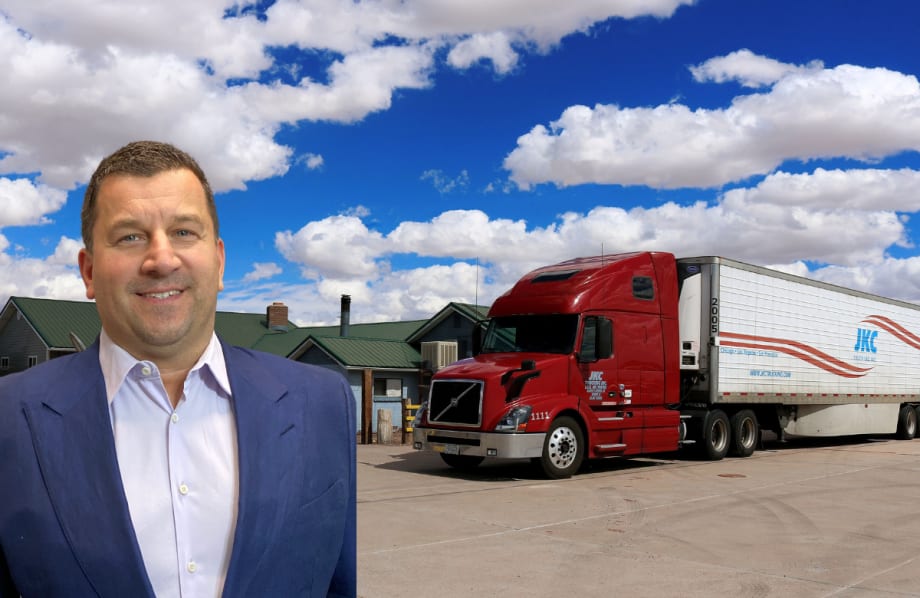
Mike Kucharski, vice president of refrigerated carrier JKC Trucking, says diesel price jumps tied to global instability are squeezing carriers already struggling with weak freight rates.
Mike Kucharski, vice president of JKC Trucking, says rising fuel prices caused by the war with Iran is dangerously close to disrupting fleet operations in the United States.
Credit:
JKC Trucking/Canva
5 min to read
The trucking industry is bracing for another cost shock as diesel prices surge following escalating conflict in the Middle East, adding new financial pressure to fleets already struggling through a prolonged freight downturn.
Mike Kucharski, vice president of refrigerated carrier JKC Trucking, said the spike in fuel costs is hitting trucking companies almost immediately and threatens to squeeze an industry where margins are already thin.
Ad Loading...
“Diesel is the lifeblood of the American supply chain,” Kucharski said. “When prices rise, it doesn’t just hit trucking companies. It affects the cost of everything Americans buy -- groceries, building materials, everything.”
Kucharski said drivers within his fleet have reported sudden jumps at the pump over the past several days, with diesel climbing by as much as 90 cents to more than $1 per gallon in some regions.
For trucking companies, fuel is often the single largest operating expense, and refrigerated fleets feel the impact even more sharply.
Ad Loading...
Unlike some other freight segments, temperature-controlled carriers must keep refrigeration units running continuously to protect cargo such as frozen food and perishable products.
“Fuel is our biggest expense, especially for refrigerated trucking companies like ourselves,” Kucharski said. “Our reefers run 24/7 to protect temperature-sensitive loads. When diesel jumps like this, it hits us overnight.”
Global Conflict Ripples Through Diesel Markets
The sudden spike follows renewed instability in the Middle East, a region responsible for a significant share of global oil exports.
On February 28, the United States attacked Iran. The Trump administration described the military action preemptive strikes to keep the Iranian government from obtaining nuclear weapons.
As a result of ongoing combat, the flow of oil tankers through the Gulf of Hormuz as well as oil production in the region has been disrupted.
Disruptions tied to geopolitical tensions can quickly reverberate through energy markets, tightening supply and pushing crude oil prices higher. Since the start of the conflict, oil prices in the U.S. have climbed 10% to 13%. The average cost of a barrel of crude oil is now around $102 to $106. (Oil was trading at about $70 a barrel in late February before the war began.)
Because diesel fuel is derived from crude oil, those increases often reach trucking companies quickly as wholesale fuel rack prices rise.
“Any geopolitical issue that threatens oil supply sends shockwaves through the energy market,” Kucharski said. “Diesel prices react almost immediately.”
The timing could hardly be worse for many trucking companies. The industry has spent much of the past two years navigating weak freight demand, depressed spot rates, and rising operating costs.
Industry data has shown thousands of small carriers exiting the market during the freight recession, and many fleets have struggled to return to pre-pandemic freight volumes.
Ad Loading...
“Since COVID, it feels like every time there’s an uptick, there’s another downtick,” Kucharski said. “Just when things start to look like they’re improving, something else hits the industry.”
A Difficult Moment for Carriers
Fuel spikes can be particularly damaging when freight markets are weak. While fuel surcharges help offset some diesel costs, they typically lag behind sudden price increases and may not fully cover the impact for carriers operating under tight contract rates.
“If volumes were moving at regular levels and rates were stronger, this wouldn’t be such a big blow,” Kucharski said. “But volumes are still down and rates are low. So every jump at the pump becomes another major hit.”
The problem is compounded for fleets hauling food and other essential goods. Refrigerated carriers cannot delay deliveries or park trucks to reduce costs because their freight must move on schedule.
“Our customers depend on us delivering frozen and fresh food on time,” Kucharski said. “We can’t just slow down or park trucks when fuel prices spike.”
Ad Loading...
JKC Trucking, based on Chicago’s South Side, operates in the temperature-controlled sector serving grocery chains, food manufacturers and other cold-chain customers.
To manage fuel volatility, the company is working with suppliers to secure fuel where possible and manage purchasing strategies, though those measures offer only limited protection against large market swings.
“We’re working with our fuel suppliers and trying to lock in prices where we can,” Kucharski said. “But there’s only so much you can do.”
Calls for Policy Stability
As geopolitical tensions continue to shape energy markets, Kucharski said policymakers should consider ways to stabilize fuel costs during major global disruptions.
“Truckers need protection during major fuel spikes, especially when they’re caused by global conflicts,” he said. “The government should be looking at policies that help stabilize energy costs and support American truckers.”
Ad Loading...
While specific proposals vary, Kucharski suggested measures that could soften sudden fuel spikes or provide financial relief to carriers during periods of extreme volatility. These include limiting or freezing fuel price increases or giving fleets government subsidies to offset rising costs.
“The reality is that trucking runs on diesel, and there’s no substitute at scale right now,” he said. “When oil prices jump because of geopolitical tensions, trucking companies feel it immediately.”
Industry leaders say the stakes extend beyond trucking itself. Because trucks move the majority of freight in the United States, rising diesel costs ultimately ripple through the broader economy.
“Without trucks, America stops,” Kucharski said. “Truckers are part of the supply chain that keeps everything moving. If that supply chain is under pressure, the entire economy feels it.”
For now, many fleets are focused on navigating the latest disruption while hoping fuel markets stabilize before the situation worsens.
Ad Loading...
“The big question right now,” Kucharski said, “is how long trucking companies can hold out if diesel prices keep climbing?”
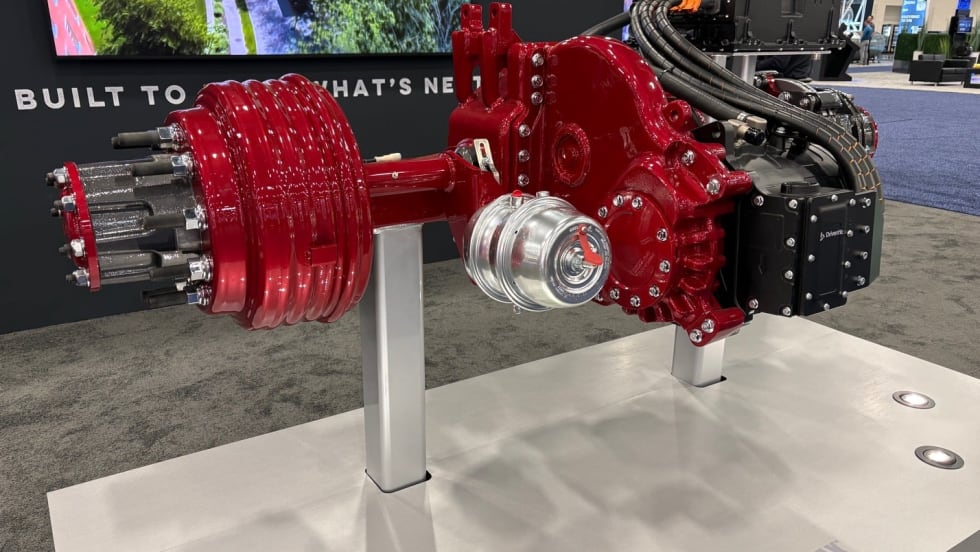
Developed with Driventic, Hendrickson's new integrated e-axle is designed to improve efficiency, reduce weight, and extend range in Class 6-7 EV applications.
Fuel savings don’t come from one big change. They come from dozens of small ones. Here’s how leading fleets are stacking gains across drivers, routing, maintenance, and more.
What works in sustainable trucking today? Heavy Duty Trucking's Top Green Fleets are finding practical ways to cut fuel use, reduce emissions, and keep freight moving.
CARB says the California Clean Fuel Reward program will begin offering point-of-sale rebates of up to $120,000 for electric commercial trucks starting June 26.
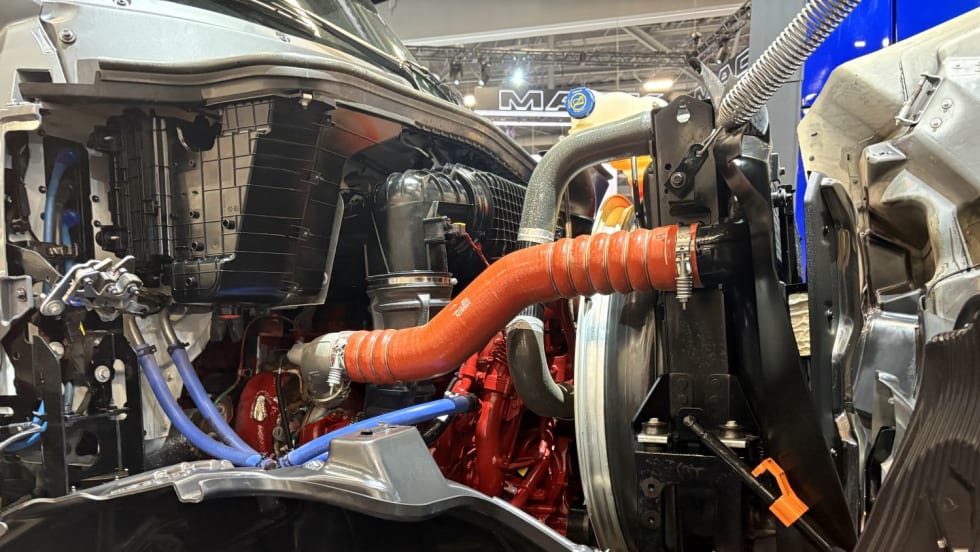
Along with unveiling its EPA 2027-compliant MP13 engine, Mack outlined powertrain changes across its Class 6-8 lineup, including new Cummins-based X10 engines.
Volvo says advances in combustion and aftertreatment helped its new EPA 2027 D13 engine avoid the fuel-economy penalties many once expected from tighter NOx emissions limits.
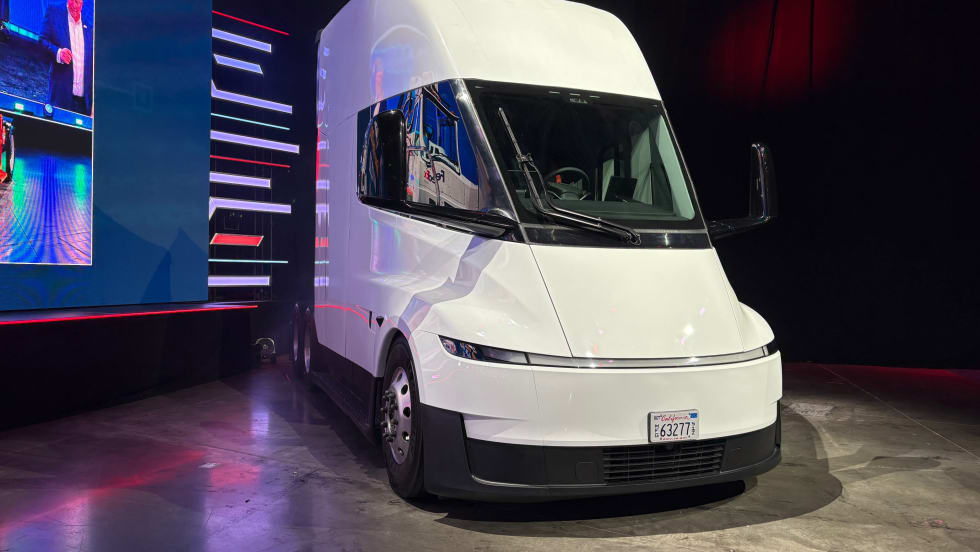
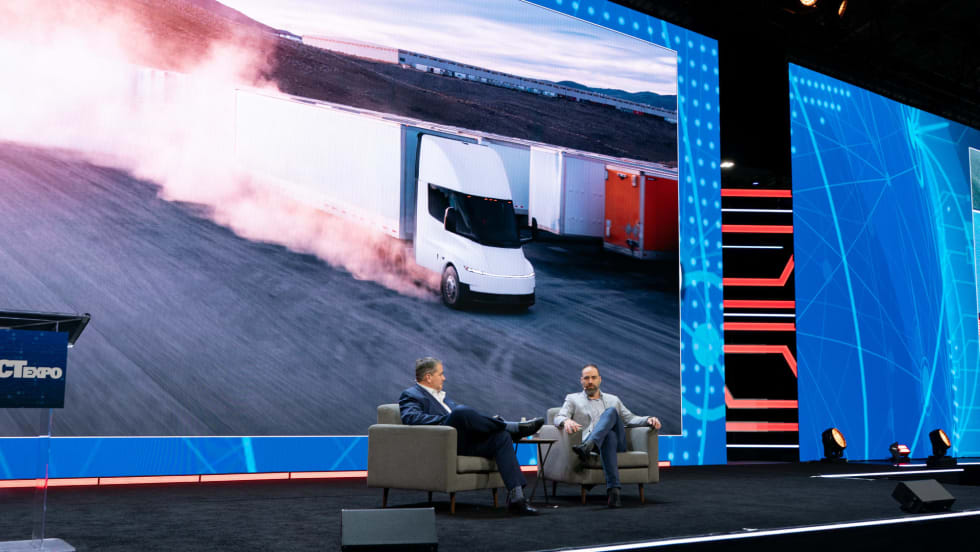
Tesla’s Semi chief at ACT Expo outlined production growth, lower-cost models, charging expansion, and why the company believes fleets are leaving money on the table by waiting on electric trucks.
A new report from the Electrification Coalition outlines key barriers slowing electric truck charging deployment and offers policy solutions to accelerate infrastructure growth.
Westport and Volvo are demonstrating a 500-hp truck with diesel-like efficiency — one that also offers what Westport says is a better pathway to using hydrogen fuel in trucks.