





The North American Council for Freight Efficiency’s latest Run on Less – Messy Middle initiative underscores a core reality for fleets navigating the transition to cleaner powertrains: There is still no one-size-fits-all answer for fleets interested in alternative fuel technologies.
NACFE: Fleets Need to Recalibrate TCO Strategies as Electric Trucks Gain a Long-Term Edge
NACFE’s Run on Less data has found that recent setbacks aside, electric truck powertrains are trending toward market leadership by 2035.
May 1, 2026

Credit:
NACFE
4 min to read
Drawing on 73,000 miles of real-world operation across 13 fleets and 14 trucks, NACFE’s newest total cost of ownership (TCO) report aims less to deliver definitive answers and more to provide a framework for decision-making in an increasingly complex landscape.
“This only happens because fleets are willing to share the good, the bad, and the ugly,” said Mike Roeth, executive director, NACFE, during an online press briefing, emphasizing the role of transparency in accelerating industry learning.
Participating fleets in the latest Run on Less study include major names such as J.B. Hunt, Penske, Amazon, and Pitt Ohio. And Roeth said all have contributed operational data and insights and opened their operations to scrutiny in the interest of advancing industry-wide understanding.
No ‘Average’ TCO Exists
A central theme of NACFE’s new report is that fleets should abandon the idea of a universal cost comparison across powertrains.
“There’s no average TCO,” Roeth emphasized repeatedly in the report and briefing.
That’s because fleet operations vary dramatically by duty cycle, geography, utilization, and energy costs. And that, he said, makes any single benchmark misleading at best.
Instead of presenting rigid conclusions, NACFE positions the report as a guide -- one that includes scenario modeling, sensitivity analyses, and practical “pro tips” to help fleets build their own cost frameworks.
Despite the uncertainty, Roeth said NACFE’s modeling does point to clear directional trends.
In the near term, diesel remains the lowest-cost option across all analyzed duty cycles. But by 2035, battery-electric trucks are projected to become the most cost-effective solution in many applications.
That shift is driven largely by expected declines in battery and powertrain costs, along with improvements in vehicle design and manufacturing scale.
“Today’s battery-electric trucks are still very much early-production designs,” Roeth noted, pointing to inefficiencies in battery sourcing, system integration, and component costs that are expected to improve significantly over time.
As those costs fall, electric trucks -- particularly in high-utilization applications -- begin to outperform diesel on total cost. Roeth added.
One of the most important takeaways for fleets is the outsized role of utilization in determining TCO outcomes.
Battery-electric trucks perform best when they are driven more miles, allowing fleets to spread higher upfront costs over greater usage. That makes applications such as drayage and return-to-base operations especially favorable.
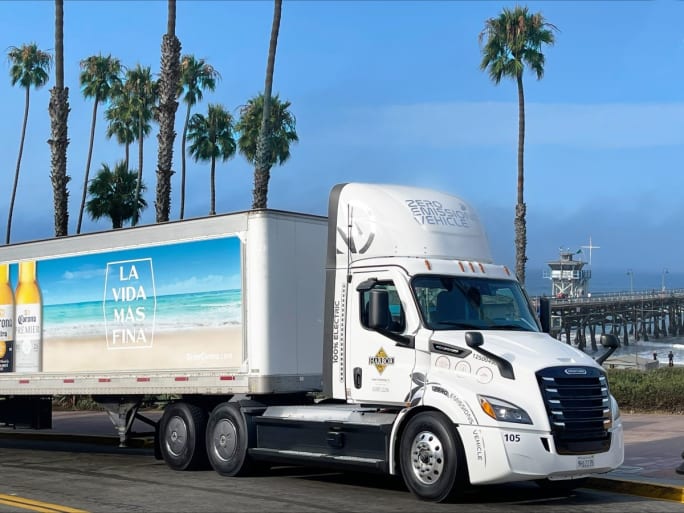
NACFE has found that battery-electric trucks are on track to be the leading powertrain option in North America by 2035.
Credit:
Daimler Truck North America
“Utilization matters,” Roeth said, noting that higher mileage can accelerate payback and improve overall economics for electric trucks.
Charging strategies also play a major role. Depot charging is significantly cheaper than public charging, and fleets that can maximize behind-the-fence charging will see stronger financial performance.
NACFE’s modeling assumes, for example, that long-haul electric trucks rely heavily on public charging, while urban operations can depend almost entirely on depot infrastructure.
Natural Gas Remains a Transitional Option
Compressed natural gas (CNG) continues to occupy a middle ground in NACFE’s analysis.
The fuel offers some near-term advantages, Roeth noted. These include lower emissions compliance hurdles and growing availability of renewable natural gas (RNG). Improvements in engine efficiency -- particularly with newer 15-liter engine platforms -- have also boosted performance, he said.
However, Roeth said NACFE sees CNG as a transitional solution rather than a long-term winner.
“It avoids some of the steep cost increases in diesel and serves as a hedge technology,” he explained. “But it too is eventually overtaken by battery-electric cost reductions by 2035.”
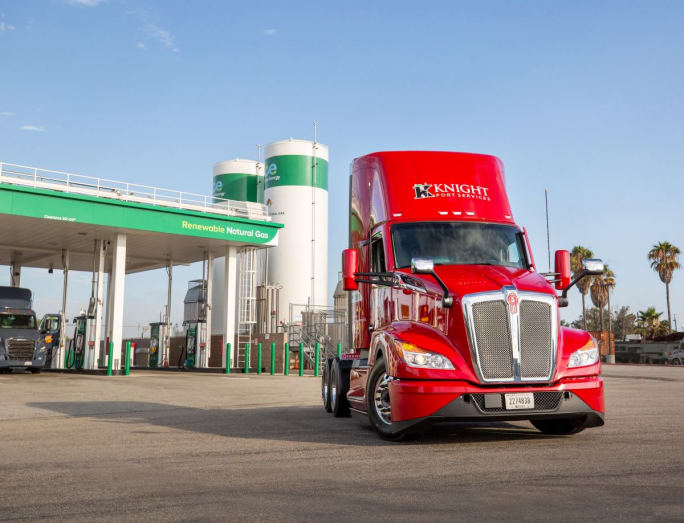
Natural gas-powered trucks offer fleets short-term operational advantages. But NACFE experts believe they too will eventually be overtaken by electric vehicle technology.
Credit:
Clean Energy
Still, as with other alternative powertrain fuels and technologies, infrastructure requirements and operational complexity remain barriers to broader adoption, Roeth added.
NACFE combined infrastructure and energy costs into a single per-kilowatt-hour estimate in its modeling, with separate assumptions for depot and public charging.
Public charging carries a premium, reflecting third-party ownership and the need for operators to recoup investment costs.
Fleets, however, are likely to develop more dynamic strategies -- such as mid-day charging or partial recharges -- to extend range and improve asset utilization.
Real-world examples from the Run on Less event showed fleets experimenting with short charging sessions to support multi-shift operations, highlighting the evolving nature of electric truck deployment.
External Factors Reinforce the Business Case
NACFE also pointed to broader market dynamics -- such as volatile diesel prices and geopolitical uncertainty -- as reinforcing the need for diversified powertrain strategies.
Rising fuel costs can quickly change the economics of different technologies, making efficiency and flexibility increasingly valuable.
“There’s no doubt that higher diesel prices increase interest in all these solutions,” Roeth said during the briefing.
At the same time, the organization cautioned against overreacting to short-term market swings, noting that fuel prices -- and regulatory policies -- can shift in both directions.
Ultimately, Roeth said NACFE has found that fleets are operating in a transitional period where multiple technologies will coexist. It’s also an environment where decision-making must be grounded in each fleet’s unique operating reality.
As the industry continues to move through what NACFE calls the “messy middle,” the ability to analyze data, adapt strategies, and align technology with operational needs will determine which fleets emerge as cost leaders in the years ahead.
“This is about giving fleets a way to think about TCO,” Roeth said, “not telling them what their number should be.”
Subscribe to Our Newsletter
More Fuel Smarts
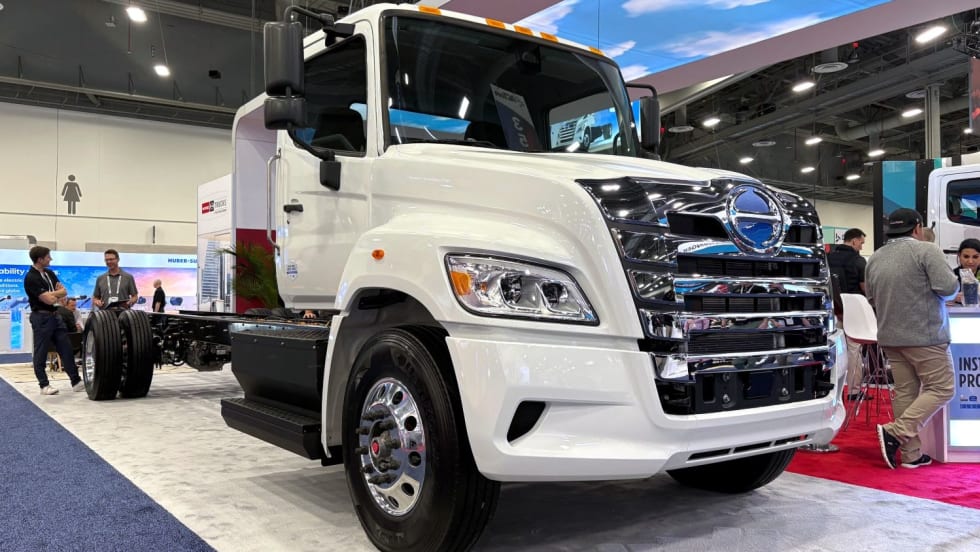
Hino Adds Electric Class 6/7 Truck
Hino says the Le Series is an important step in the company's efforts to reduce environmental impact and support its customers’ sustainability goals.
Read More →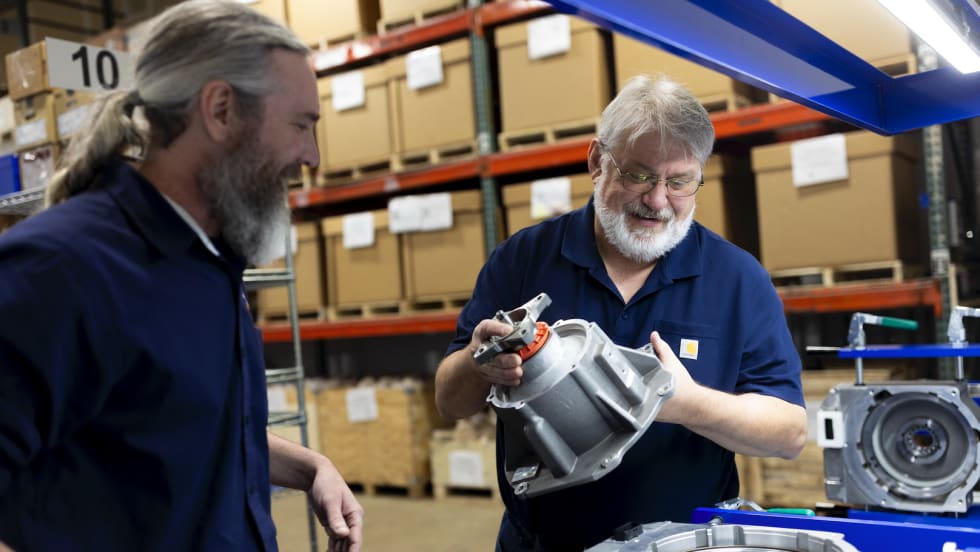
Can Multi-Speed EV Transmissions Can Solve Heavy Trucking’s Biggest Electric-Vehicle Problems?
A startup called Sigma Powertrain believes purpose-built multi-speed gearboxes can boost efficiency, reduce battery size and improve gradeability for heavy-duty battery-electric trucks.
Read More →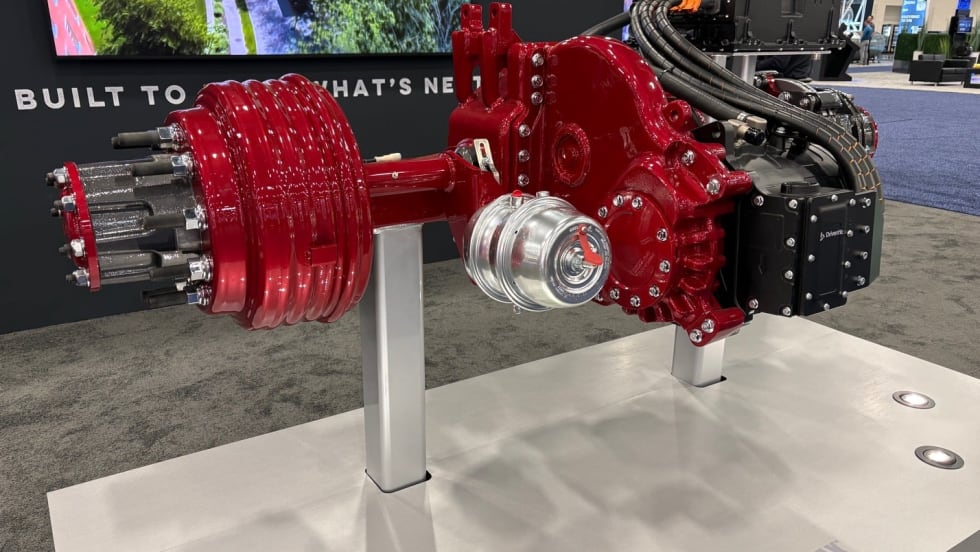
Hendrickson Debuts Electraax E-Axle for Medium-Duty Trucks
Developed with Driventic, Hendrickson's new integrated e-axle is designed to improve efficiency, reduce weight, and extend range in Class 6-7 EV applications.
Read More →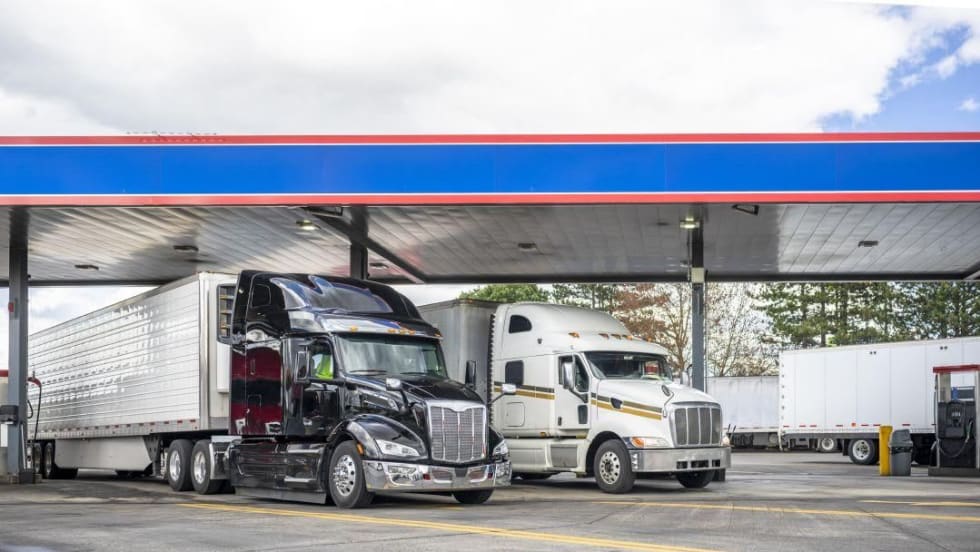
50 Ways Fleets Can Cut Fuel Costs Now — Without Buying New Trucks
Fuel savings don’t come from one big change. They come from dozens of small ones. Here’s how leading fleets are stacking gains across drivers, routing, maintenance, and more.
Read More →
Top Green Fleets 2026: How Fleets Are Reducing Emissions in the Real World
What works in sustainable trucking today? Heavy Duty Trucking's Top Green Fleets are finding practical ways to cut fuel use, reduce emissions, and keep freight moving.
Read More →
California Launching $1 Billion Electric Truck Rebate Program
CARB says the California Clean Fuel Reward program will begin offering point-of-sale rebates of up to $120,000 for electric commercial trucks starting June 26.
Read More →
Mack Unveils EPA 2027-Compliant MP13 Engine With More Power, Better Fuel Economy
Along with unveiling its EPA 2027-compliant MP13 engine, Mack outlined powertrain changes across its Class 6-8 lineup, including new Cummins-based X10 engines.
Read More →
How Volvo’s New D13 Engine Meets EPA 2027 Emissions Without Sacrificing Power or Fuel Efficiency
Volvo says advances in combustion and aftertreatment helped its new EPA 2027 D13 engine avoid the fuel-economy penalties many once expected from tighter NOx emissions limits.
Read More →
'TCO’s Here.' Tesla Says Electric Semi Economics Are Ready for the Mainstream
Tesla’s Semi chief at ACT Expo outlined production growth, lower-cost models, charging expansion, and why the company believes fleets are leaving money on the table by waiting on electric trucks.
Read More →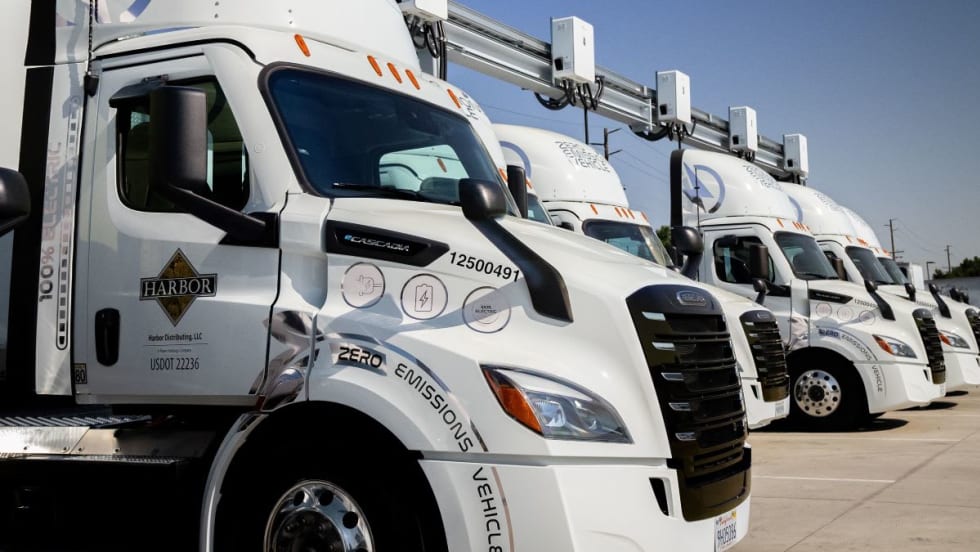
What Will It Take to Scale Electric Truck Charging? New Electrification Coalition Report Identifies 11 Solutions
A new report from the Electrification Coalition outlines key barriers slowing electric truck charging deployment and offers policy solutions to accelerate infrastructure growth.
Read More →