New Trojan Driver Cargo Theft Scam Bypasses Carrier Vetting Systems
Cargo theft rings plant operatives as drivers inside legitimate, fully vetted carriers, then execute coordinated thefts that look like a traditional straight theft from the outside.
Cargo theft rings aren't just creating fake trucking companies. Now they're infiltrating real ones.
Credit:
HDT Graphic
3 min to read
Cargo thieves have developed a new method of strategic cargo theft, the “Trojan Driver Scam,” which circumvents current carrier vetting methods. The Transported Asset Protection Association (TAPA Americas) issued a warning of this emerging cargo theft tactic.
Cargo theft rings plant operatives as drivers inside legitimate, fully vetted carriers, then execute coordinated thefts that look like a traditional straight theft from the outside.
Ad Loading...
The carrier's credentials are clean, the vetting checked out, and the driver looks negligent, not nefarious.
“The Trojan Driver Scam represents a dangerous evolution in cargo theft tactics,” said Scott Cornell, chair of TAPA Americas, who first identified the scheme.
“Criminal networks are no longer just creating fake companies. They're infiltrating real ones."
Ad Loading...
How the Trojan Driver Scam Works
The Trojan Driver Scam operates through a six-step process:
Theft ring operatives secure driver positions with legitimate, fully vetted carriers.
If the driver passes through the carrier’s employment vetting, they go on to operate normally until assigned a high-target load.
On instruction from the theft ring, the driver parks the loaded truck at a predetermined location during a "routine break."
The crew steals the load while the driver is conveniently absent, making the driver look like a victim as well.
The carrier terminates the driver for “violating protocols” — exactly as planned.
Now “unemployed,” the operative moves to the next legitimate carrier and repeats the scheme
“What makes this particularly insidious is that it exploits the trust the industry has built into critical vetting systems,” Cornell explained. “A carrier can have perfect credentials, stellar reviews, and clean authority, yet still be unknowingly facilitating theft through a planted operative.”
Cargo Theft Growing
The warning comes as cargo theft continues to rise.
According to Verisk's CargoNet (the most comprehensive tracking available in the absence of federal data) the industry recorded 3,594 theft incidents last year, resulting in an estimated $725 million in losses.
Strategic theft methods, including double brokering scams and motor carrier number fraud, accounted for 1,839 incidents in 2025, underscoring how rapidly criminal networks are evolving their tactics to bypass security measures.
Given the voluntary nature of cargo theft reporting, these numbers are based on data that captures only a fraction of the actual cargo thefts in the country, noted TAPA Americas in a news release.
“Cargo thieves are constantly pressure testing new methods, and we have already seen multiple instances of this tactic being deployed,” Cornell said.
Industry-Wide Collaboration Needed
“The industry has made tremendous progress in combating cargo theft, but criminals adapt faster than our defenses evolve.” Cornell said. “This is why industry collaboration is absolutely critical to close these gaps. We can't afford to operate in silos when theft rings are operating as sophisticated networks.”
Cindy Rosen, TAPA executive director, emphasized that addressing emerging threats like the Trojan Driver Scam requires industry-wide adoption of consistent security standards and a layered approach to supply chain security.
Ad Loading...
To help combat emerging threats like the Trojan Driver Scam, TAPA Americas encourages trucking companies to conduct thorough background checks and recommends that freight brokers consider working with their trucking partners to require drivers to be employed with the trucking company for six months to a year before being assigned a high-target load.
“The Trojan Driver Scam is a wake-up call,” Rosen said. “It reminds us that the industry needs to constantly reassess our assumptions about where vulnerabilities exist. Our supply chains are only as secure as our weakest links.”
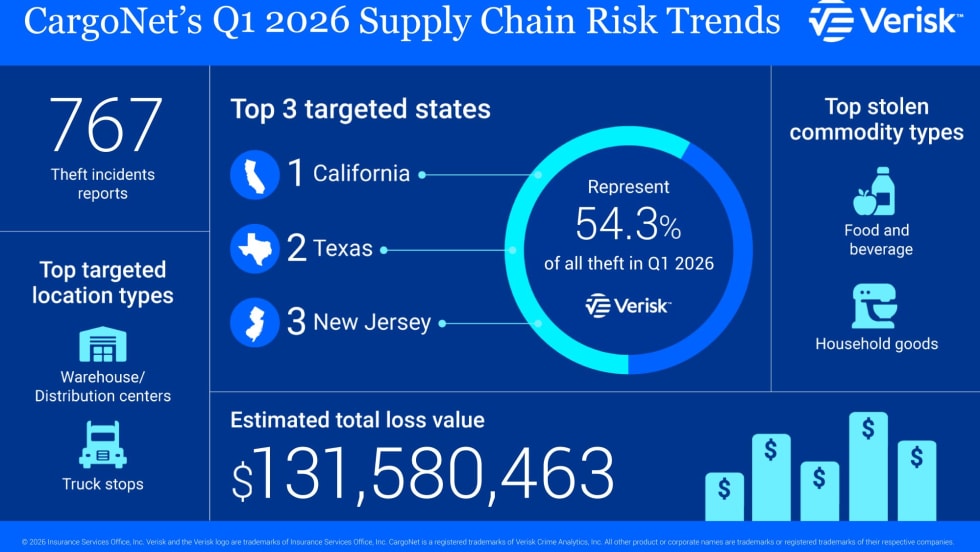
CargoNet reports fewer supply chain crime events to start 2026. But losses hold steady as organized crime shifts tactics toward impersonation schemes and high-value goods.
Heavy Duty Trucking is searching for forward-looking leaders at trucking fleets as nominations for HDT’s Truck Fleet Innovators 2026. Deadline is May 15.
The American Transportation Research Institute will examine driver coaching, regulatory impacts — including the "Beyond Compliance" concept —and weather disruptions that shape trucking operations.
Fleet Advantage's Brian Antonellis says it's time for fleets to get back to the fundamentals of good maintenance practices. And that includes replacing older, inefficient equipment.
Load matching for flatbed, lowbed, oversize and overweight loads can't be automated like basic van freight, but Truckstop.com is adding more high-tech tools to help.
An expanded Trucker Path and Truckstop.com integration brings more freight opportunities into the TruckLoads app while emphasizing security and network quality.
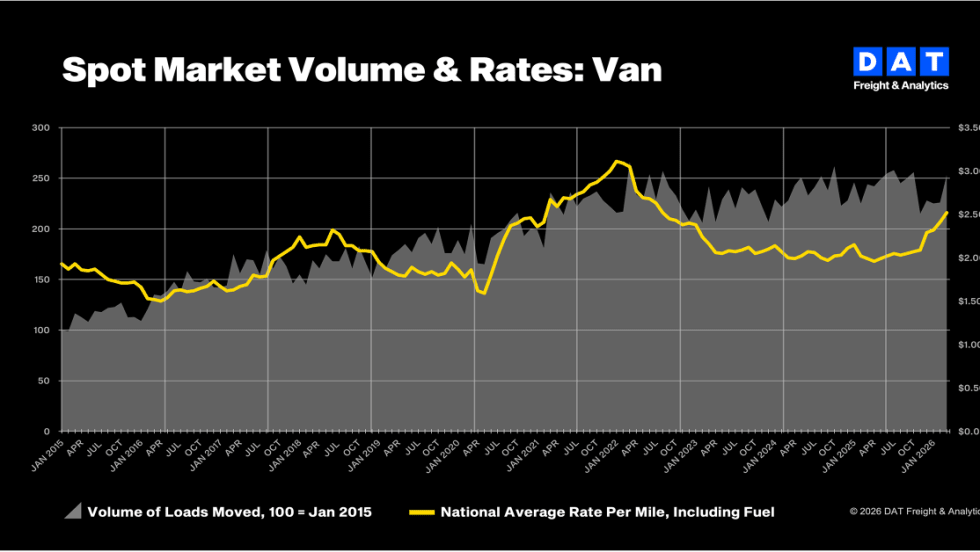
Strong March freight demand combined with a spike in fuel costs pushed both spot and contract truckload rates to their highest levels in more than two years.