




ISEE Unveils Auto-Coupling System for Autonomous Yard Trucks
ISEE has developed an AI-powered trailer coupling system for autonomous yard tractors.

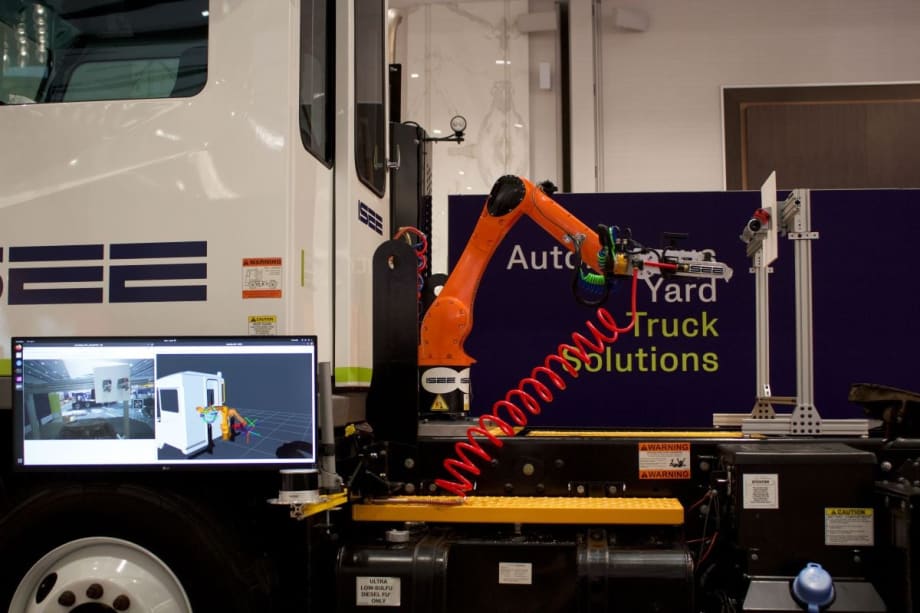
Using AI-powered auto-coupling technology, the ISEE trailer auto-coupling system autonomously identifies the precise locations and orientations of the trailer air connectors for both the service and parking brakes.
Photo: ISEE
At the Manifest supply chain technology showcase, ISEE, an autonomous vehicle company, unveiled its fully automated, AI-powered trailer auto-coupling system for autonomous yard trucks.
ISEE’s technology autonomously couples the trailer and connects the airlines without any trailer modifications, adapters, markers, or remote control.
AI-Enabled Robotic Arms
The ISEE trailer auto-coupling system integrates a six-axis robotic arm on the back of the autonomous yard truck cab. Using AI-powered auto-coupling technology, the system autonomously identifies the precise locations and orientations of the trailer air connectors for both the service and parking brakes.
Because gladhands can vary in location, orientation and type from one trailer to another. This makes the process of finding and attaching them a challenging task for a robotic system.
By leveraging experience and data from over 10,000 operational moves in customer sites, ISEE’s AI-powered system is trained to precisely identify and connect the airbrake lines autonomously. This eliminates the necessity for remote control or attaching extra adapters to the trailers.
Efficiency and Safety Enhancements
Automating the trailer coupling process eliminates the need for staff to manually couple and decouple trailer airlines, ISEE said in a press release. This significantly enhances safety and simplifies management, the company added.
ISEE cited U.S. Bureau of Labor Statistics reports that almost 30% of injuries in the trucking industry occur when drivers slip or fall while working. Stepping outside the cab to perform tasks such as connecting the trailer air lines poses a risk, including slippery steps and the cab's average height of four feet from the ground. The company said its system can help reduce the number of injuries by allowing its automated system to perform those tasks.
“Our latest AI-powered trailer auto-coupling technology leverages generative AI models for data augmentation and feature generation. This technology adopts an end-to-end approach to train gladhand type and pose in a consistent fashion, ensuring adaptability and versatility in our AI systems across diverse gladhand variations and environmental conditions,” said Yibiao Zhao, ISEE CEO and co-founder. “The robot arm is adept at attaching and detaching the gladhands, skillfully locating and handling them in any position, akin to human dexterity.”
The new AI-powered trailer auto-coupling technology augments ISEE’s existing, auto-coupling solution that customers are using today, the company said.
The existing solution uses a trailer adapter that standardizes various trailer connectors in a consistent location across the trailer fleet. These adapters can be clipped onto trailers as they enter the yard and are removed when the trailer departs.
As a result, ISEE said customers can now choose which level of trailer automation they prefer, making its solution a good for both customers who control their fleet or utilize a captive pool of trailers for their campus.
More Equipment

Help HDT Find Trucking’s Top Products
Have you come across a new product that could make a difference for trucking fleets? Nominate it for HDT’s 2027 Top 20 Products Awards by November 9.
Read More →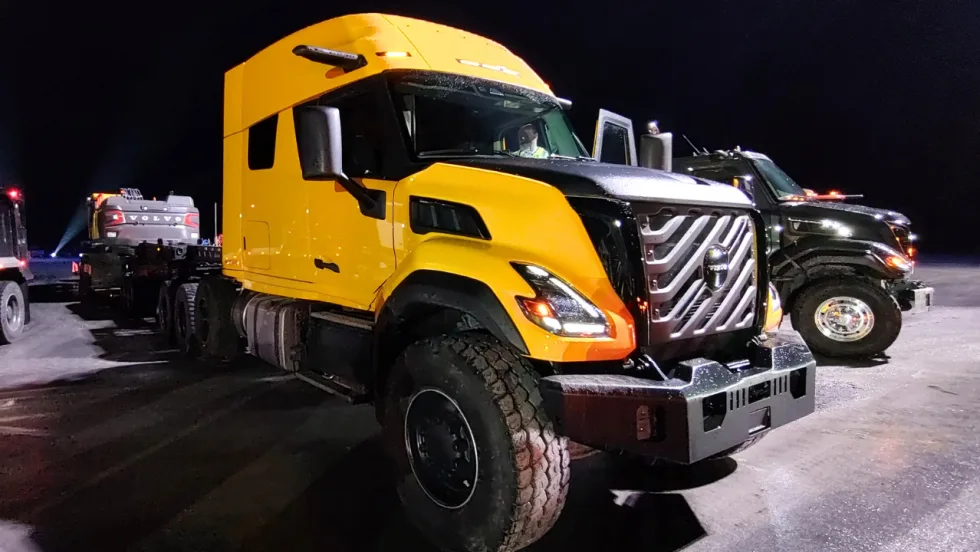
Volvo Unveils New VNX Heavy-Haul and Vocational Truck
Volvo Trucks has launched the VNX, a new vocational truck also available as a tractor in day cab and two sleeper configurations, with one heavy-haul model. The Volvo VNX is powered by Volvo's D13 platform, which delivers up to 540 horsepower and 1,950 pound-feet of torque and is EPA 2027-compliant.
Read More →
How GP Transco Cuts Trucking Fuel Costs, a Tenth of a Gallon at a Time
What’s another tenth of a mile per gallon worth? GP Transco shares how equipment upgrades and driver coaching turn small gains into meaningful fuel savings.
Read More →
Electric Yard Tractors Move Beyond Pilots
Operating-cost savings have overtaken sustainability goals as the leading reason surveyed fleets are adopting battery-electric terminal tractors, according to new NACFE research.
Read More →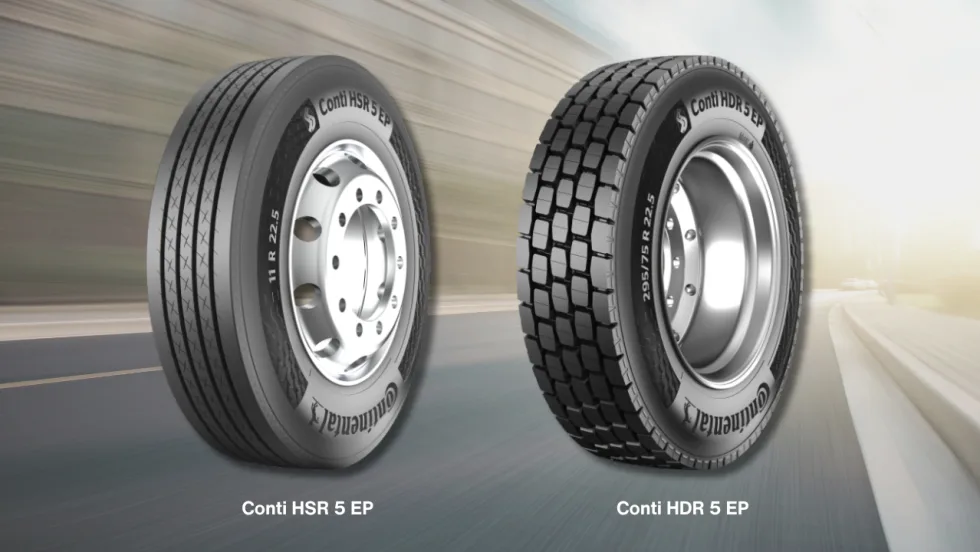
Continental Introduces New Regional Truck Tires
Continental says its new Generation 5 steer and drive tires for regional operations offer longer tread life, with estimated mileage gains of 22% and 19%, respectively.
Read More →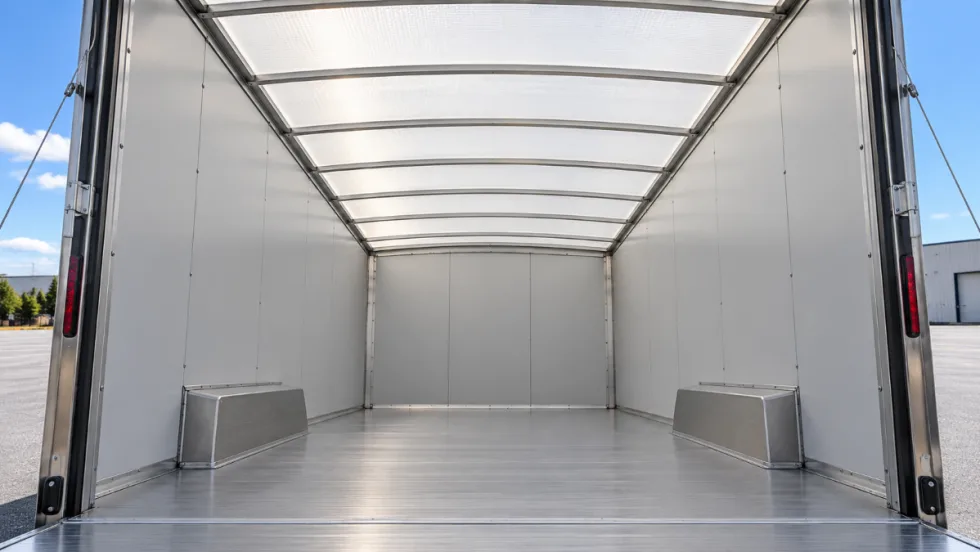
Tekmodo Introduces CargoBright Brand for Translucent Trailer Roofs
CargoBright is designed to diffuse daylight across the cargo area while performing as a working vehicle roof.
Read More →
Fleet Economics Shape Electric Truck Outlook
ACT Research expects costs, charging infrastructure, and technology improvements to drive zero-emission commercial vehicle adoption as federal regulations and incentives retreat.
Read More →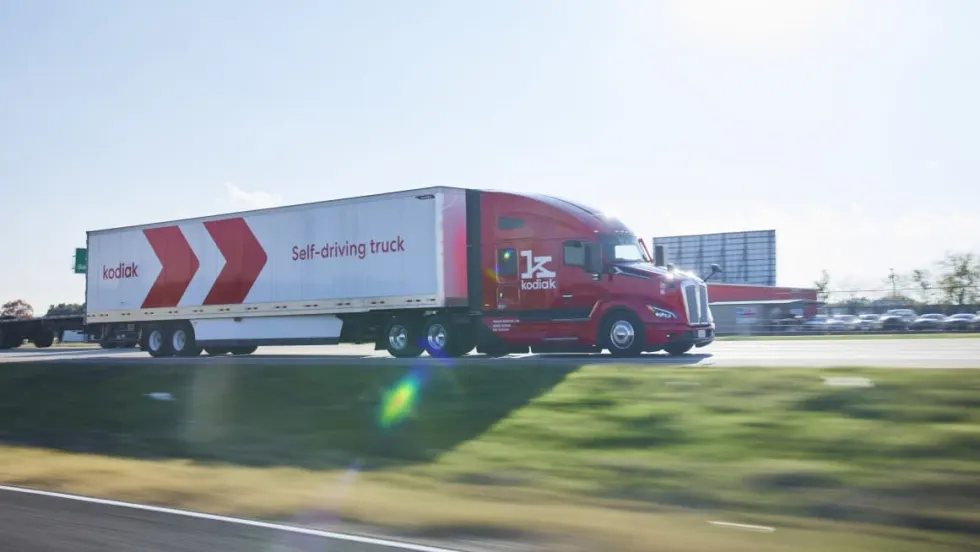
Kodiak Targets Dallas–Houston for Driverless Trucks
The company says its autonomous trucks are completing the I-45 run without a safety observer taking control. It plans to remove the observer by the end of 2026.
Read More →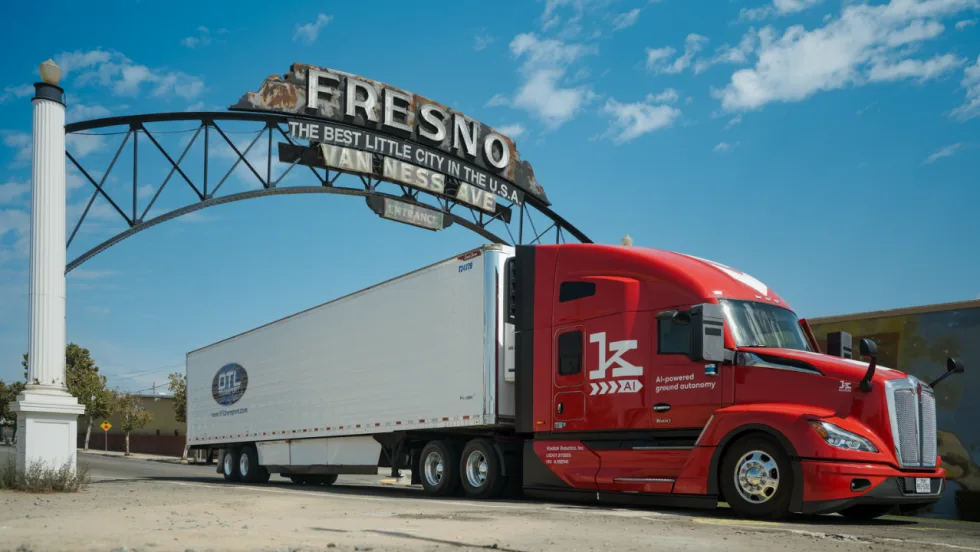
Kodiak Hauls Produce in California Autonomous Truck Pilot
Kodiak AI and DTL Transport have begun hauling produce between Fresno and Los Angeles under California’s new rules for testing heavy-duty autonomous trucks. A safety driver remains behind the wheel.
Read More →
Used-Truck Remarketing Math Is Changing
Used-truck value is no longer just a concern at trade-in. Decisions made throughout a truck’s first life can influence what it’s worth years later.
Read More →