





From Drive-Thrus to Highways: Understanding Dynamic Truck Pricing
Used-Truck Remarketing Math Is Changing
Used-truck value is no longer just a concern at trade-in. Decisions made throughout a truck’s first life can influence what it’s worth years later.
September 22, 2026

By the time a truck is sitting on a used lot, a surprising amount of its value has already been decided. That changes how fleets, dealers, and OEMs look at the equipment long before anyone is ready to sell it.
Credit:
HDT with assistance from ChatGPT. Original truck photo courtesy of SelecTrucks.
10 min to read
- Used-truck resale value is shaped long before trade-in, by maintenance practices, vehicle condition, warranty coverage, original specs, and the timing of when the truck leaves the fleet.
- Residual values and remarketing decisions can affect fleet economics for years, especially when used-truck prices, freight demand, and inventory levels change between purchase and resale.
- Today’s used-truck buyers are more demanding, putting greater value on maintenance records, inspections, reconditioning, technology features, and a seller willing to stand behind the truck.
*Summarized by AI
For years, used truck remarketing sat in a pretty predictable place in the truck sales cycle. A fleet bought new equipment, somebody agreed to take the old trucks back, and the used side of the business did what it needed to do to help make the new-truck transaction work.
There was money to be made, certainly, but used trucks were often treated more like the necessary next step after a new sale than a business that deserved its own strategy.
That thinking has been changing, and not just because used truck prices went on a wild ride over the past few years.
What has really changed is how connected the entire life of the truck has become. The residual written into the original deal, the fleet’s maintenance practices, the timing and condition at turn-in, and what the dealer does with the truck afterward can all affect its eventual value.
So can the expectations of the buyer waiting on the other end of the transaction.
By the time a truck is sitting on a used lot, a surprising amount of its value has already been decided. That changes how fleets, dealers, and OEMs look at the equipment long before anyone is ready to sell it.
“The model is changing, and the misunderstanding is in assuming it still works the way it did a decade ago,” said Chris Backeberg, president of Daimler Truck Remarketing, which operates the SelecTrucks used truck brand and retail network.
“Remarketing today isn't just the tail end of the new-truck sale. It is actually a profit-driven business in its own right.”
The Used Truck Conversation Starts Earlier Than You Think
Taking a tractor out of service used to be easier to think of as the last box in the lifecycle. The fleet had gotten the miles it wanted out of the truck, replacement equipment was coming in, and now somebody had to figure out where the old unit was going.
That is still technically what happens, but it leaves out much of the economics behind the decision.

Today’s used-truck buyer is generally more informed, more particular, and more willing to walk away from a truck that does not feel right.
Credit:
SelecTrucks
“This really depends on the perspective and mindset, the fleet, the dealer, the OEM,” Backeberg said. “What has changed across all three entities is that taking a tractor out of service is no longer a disposal topic in a new truck transaction or a simple checklist in a fleet's operating life cycle.”
For a fleet, there is an obvious reason to care. The difference between a well-maintained truck sold at the right time and one that enters the secondary market with cosmetic damage, deferred repairs, or poor timing can be meaningful.
Dealers and OEMs have their own reasons for looking at the business differently. Used trucks can bring in customers who might not yet be in the market for new equipment. Those customers still need parts, service, financing, warranties, and support.
One example Backeberg pointed to was a large dealer that built its presence in a major truck market on used equipment.
“They leveraged multiple relationships to acquire large packages of trucks and sold them into their market, expressly to drive parts and service work for their shops,” he said.
That strategy only works if the dealer views used equipment as a business worth building around.
“The biggest mistake is carrying the mindset that it is a ‘necessary’ byproduct of a new truck sale,” Backeberg said.
“If that is the perspective, then the dealer likely views it as a type of transaction that carries too much risk and either steers away from anything involving trades or does not price it to the market.”
There is also a longer-term play. A used-truck buyer today may be a new-truck buyer several years from now, particularly if the first experience with the dealer is a good one.
“Our job is to turn today's used-truck buyer into tomorrow's new-truck buyer,” said Marc Sutton, director of distribution at Daimler Truck Remarketing.
Some of the Remarketing Math Was Written Years Ago
One of the stranger realities of remarketing is that some of the most important decisions affecting a truck’s eventual value are made when the truck is still new.
A residual commitment, or tradeback, can be established at the time of the original transaction and may have to hold up three, four, five, or even six years later. That number is set before anyone knows exactly what freight demand, used-truck supply, rates, or the broader economy will look like when the truck comes back.
This number “is fixed at a single moment for a point in time in the future, so it has to hold up for three to six years,” said Phillip DeGroat, director of used truck acquisitions and operations at Daimler Truck Remarketing. “And then you live by your commitment.”
For the OEM, that creates future exposure. For the fleet, the residual can help establish a depreciation plan and provide more visibility into what the truck may be worth at replacement time. It can also become part of the next new-truck purchase when those commitments are activated.
Why Residual Truck Values Are Hard to Predict
But the number written on day one is not the whole story. By the time the truck comes back, its value may look very different from what anyone expected.
Strong maintenance, remaining warranty, and a favorable market can support the value. A soft freight environment or a flood of used inventory can work in the other direction.
A truck that looked like a safe bet several years earlier may return to a very different market than the one everyone imagined when the commitment was written.
That is where the cradle-to-grave view becomes important. The original residual is only one part of what happens between delivery and the day somebody else climbs into the cab as its second owner.
Maintenance History Is More Than a File Folder
Fleets have always understood that good maintenance keeps trucks working. What is becoming harder to ignore is how directly those same decisions follow the truck into the secondary market.
A well-maintained truck does not just run better while it is in the fleet. It generally shows better when it comes out.

Used-truck sellers are less willing to quietly absorb every problem that arrives at turn-in. Fleets may be asked to correct an issue before a truck is accepted, and in some cases, poorly maintained equipment may simply be declined.
Credit:
SelecTrucks
“Our customers, for the most part, have strong maintenance standards,” Backeberg said. “Customers who defer maintenance or do not repair cosmetic problems, dents, missing components, poor body damage repair, can develop a reputation that carries itself well into the second life.”
Buyers remember fleet names. A reputation for maintaining equipment well can make a truck easier to trust before the buyer even gets through the inspection. A poor reputation can follow the equipment, too.
“Fleets known for investing up front or when issues arise command both respect and resale value in the secondary market,” Sutton said. “The end retail buyers know who maintains their equipment well and who doesn't, and that credibility follows the trucks.”
The details are not always dramatic. Unrepaired body damage, corrosion, missing components, or questionable repairs can all affect how a buyer views the truck.
One rule of thumb from DeGroat is simple: If body damage is larger than a credit card, fix it.
Mechanical issues can be much more expensive.
Deferred Maintenance Can Get Expensive at Resale
Aftertreatment systems are one area where deferred maintenance can become especially painful. An unmaintained diesel particulate filter can turn into a five-figure repair and, in the wrong circumstances, contribute to much larger engine problems.
That is also part of the reason remaining warranty can carry real value on a used truck. Buyers know coverage gives them some protection against the unknown.
Nobody can open every One Box and aftertreatment filter to determine exactly how much useful life remains, which is why SelecTrucks runs a DPF exchange program for its dealers and backs those components with its maximum warranty coverage, including collateral damage from a failure.
Sellers also are becoming less willing to quietly absorb every problem that arrives at turn-in. Fleets may be asked to correct an issue before a truck is accepted, and in some cases poorly maintained equipment may simply be declined.
The resale happens at the end of the truck’s first life, but much of its condition and value has been built mile by mile.
What Today's Used-Truck Buyers Look For
The other side of the equation is that used-truck buyers have changed. Today’s retail buyer is generally more informed, more particular, and more willing to walk away from a truck that does not feel right.
“Buyers have become far more demanding, and that has raised the standard of doing business,” Sutton said.
They are not just looking at the paint. Buyers are crawling underneath for leaks, checking rust and fittings, looking at tire tread and brake life, driving the truck, and listening for anything that feels off.
“If it shows body damage or doesn't sound right, they walk around that truck and look for another unit, hopefully one that is still in your inventory,” Sutton said.
Expectations for the equipment itself have also moved. Buyers are looking for 13- and 15-liter power, higher horsepower, automated transmissions, and increasingly the kinds of safety and driver-assistance features once associated primarily with newer equipment.
Used-Truck Buyers Expect More Technology
Cameras, radar, and side-object detection are finding their way into the used market as newer model years cycle out of fleets.
That adds another layer to the remarketing process. Dealers are preparing trucks with more systems and electronics to inspect and more features buyers reasonably expect to work when the truck changes hands.
“That is why standing behind units with a warranty, conducting inspections, and properly prepping the truck for sale matter to our customer base,” Backeberg said. “It lets the buyer trust the purchase and minimizes friction because they have peace of mind.”
A used-truck buyer is already accepting some uncertainty about somebody else’s equipment. Good records, sound condition, credible inspections, and a seller willing to stand behind the truck can reduce that uncertainty and help determine whether a unit moves or sits.
Why Used-Truck Inventory Aging Matters
Sitting is where used-truck economics can get ugly. Anybody can look disciplined when values are climbing. The real test comes when the market turns and an organization is holding trucks bought under a different set of assumptions.
“Discipline is mostly about how you treat inventory and risk when the market turns,” Sutton said. “The operators who stay healthy are acutely aware of what inventory they're holding and turn it quickly, backed by aging policies that force action before a unit gets stale.”
That sounds simple until the truck sitting in inventory is worth less than what somebody paid for it.
During strong markets, dealers may buy aggressively because the last few trucks made money. Fleets may hold equipment longer because they expect values to improve.
Then the market changes.
When Used-Truck Prices Turn
When used prices ran up a few years ago, some buyers loaded up on the assumption they would keep climbing, then spent a long stretch working that inventory back off at numbers the market no longer supported. The temptation is to hold onto the truck and wait for the value to come back.
That is where discipline gets uncomfortable.
“The hardest discipline is taking the loss early, because in used trucks the first loss is usually the best loss,” Sutton said. “It doesn't age well, so the question is whether you sell it now or hope it tastes better in six months.”
Usually, it does not. Aging policies force a decision before hope turns into an inventory strategy.
The other piece of the puzzle is intake.
Steadier operations try to avoid a feast-or-famine cycle where a flood of trucks arrives, everybody scrambles to move them, and then the pipeline goes quiet. A more predictable flow lets the business keep reconditioning, inspecting, pricing, and selling equipment through good markets and bad.
Remarketing Starts With the Truck Lifecycle
The bigger shift isn't about one pricing strategy, one residual formula, or one way of managing inventory. It is that a used truck’s value is built throughout its first life and carries into the second.
Residual assumptions, maintenance, timing, condition, warranty, market conditions, vehicle specifications and the ability to recondition and retail the truck all play a role. Even the reputation of the fleet that operated it can follow the unit into the secondary market.
“The partnership among the customer, the dealer, and the OEM is tighter than ever, and every stage of the truck's life adds to or subtracts from its value,” Backeberg said.
Fleets generally know their trade cycles and when trucks are scheduled to come out of service. What that date cannot settle is the truck's value, because much of that was determined by decisions made years earlier.
For fleets, that means managing to the depreciation schedule and trade cycle while watching used pricing and judging how much gain on sale they can capture.
When the market supports their out-service schedule, fleets may retail the trucks themselves. When either piece softens, the equipment moves down the chain to dealers and OEMs.
For dealers, used trucks can be a business opportunity that brings customers back to the dealership and creates new relationships. For OEMs, remarketing means managing assumptions made at the beginning of a transaction that may still be playing out half a decade later.
The used truck may change owners, but the math follows it the whole way.
Quick Answers
Traditionally, used truck remarketing was a straightforward process within the truck sales cycle. Fleets would buy new equipment, and the old trucks were taken back as part of the transaction to facilitate new-truck sales. There was profit potential, but it was often viewed as a necessary step rather than a strategic business facet.
*Summarized by AI
Subscribe to Our Newsletter
More Equipment
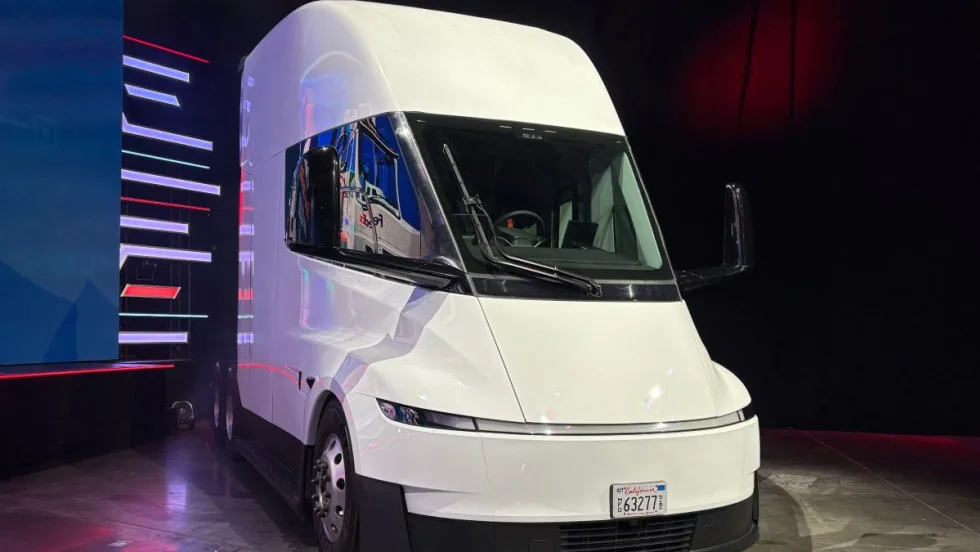
Fleet Economics Shape Electric Truck Outlook
ACT Research expects costs, charging infrastructure, and technology improvements to drive zero-emission commercial vehicle adoption as federal regulations and incentives retreat.
Read More →
Kodiak Targets Dallas–Houston for Driverless Trucks
The company says its autonomous trucks are completing the I-45 run without a safety observer taking control. It plans to remove the observer by the end of 2026.
Read More →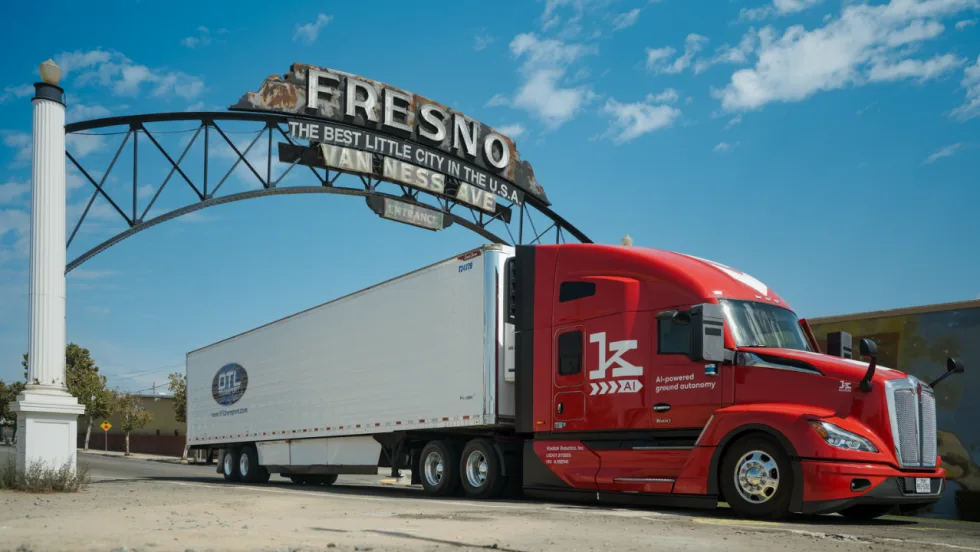
Kodiak Hauls Produce in California Autonomous Truck Pilot
Kodiak AI and DTL Transport have begun hauling produce between Fresno and Los Angeles under California’s new rules for testing heavy-duty autonomous trucks. A safety driver remains behind the wheel.
Read More →
How Volvo Updated Its D13 for EPA 2027 [Watch]
Volvo’s updated D13 promises lower emissions without sacrificing performance or fuel economy. Take a closer look at what changed inside the engine in this HDT Spotlight video.
Read More →
Michelin Tire Improves Efficiency and Durability for Regional Fleets
The Michelin X Multi Energy D2 is a regional haul drive tire engineered to help fleets improve fuel efficiency, durability and traction in demanding stop-and-go operations.
Read More →
ZF Expands Commercial Vehicle Push in North America
ZF is expanding its North American commercial-vehicle presence with new transmission applications, electrification, trailer technology and autonomous-driving systems.
Read More →
Tesla Wants a Self-Driving Semi. Are Cameras Enough?
Could Tesla’s camera-only autonomous driving technology work on an 80,000-pound Semi? In this commentary, HDT's Deborah Lockridge takes a look at Tesla, Cybercab, and how autonomous trucks see the road.
Read More →Kodiak: Driverless Long-Haul Truck Launch on Track for 2026
Kodiak AI says its driverless long-haul safety case is 93% complete and it remains on track to begin commercial operations by year-end 2026.
Read More →
What DOT’s Automated Vehicle Strategy Means for Trucking
The U.S. Department of Transportation issued a new automated-vehicle strategy that outlines plans for driverless-truck regulations, cross-state freight corridors, and federal safety standards.
Read More →
East Coast Port Launches $45M Electric Truck Push
The Port Authority of New York and New Jersey announced millions in incentives for zero-emission drayage trucks, yard tractors, and new charging hubs near the port.
Read More →