




FMCSA Moves to Codify English Language Requirements for Commercial Drivers
By changing regulations on English-language proficiency requirements for commercial drivers, rather than relying on a guidance memo, the FMCSA said future administrations won't be able to walk back the Trump administration's stricter enforcement with just a memo.

HDT/CVSA
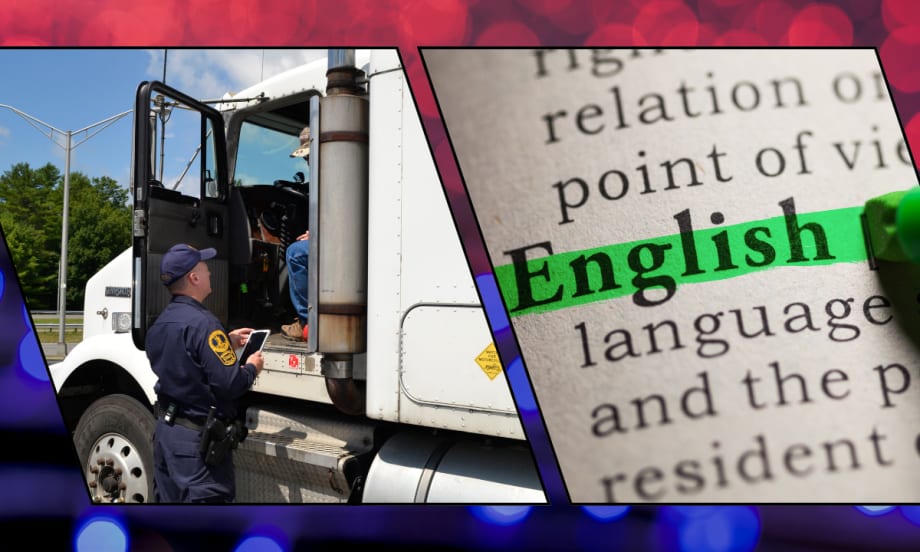
The Federal Motor Carrier Safety Administration has proposed a rule that would make its guidance on truck driver English language proficiency a regulation, seeking to avoid another administration coming in and changing the guidance again.
What’s the difference? Regulations, and changes to regulations, by law must go through a formal rulemaking process.
Guidance on how those regulations are enforced, however, is not.
Enforcing the English Language Requirement
Federal regulations can be vague or confusing when it comes to how they are actually enforced or interpreted.
There has long been a requirement in federal regulations for commercial motor vehicle drivers to be able to speak English, dating back to 1937. Those said drivers must be able to speak and read English satisfactorily to:
- Converse with the general public.
- Understand traffic signs and signals.
- Respond to official questions.
- Make legible entries on reports and records.
In 2016, under the Obama administration issued a memorandum, or guidance, that allowed more leeway in interpreting the language.
In that memo, inspectors were instructed not to issue a violation for ELP if the driver was able to communicate using tools such as smartphone applications or interpreters.
Shortly after taking office in 2025, President Trump issued an executive order declaring English to be the official language of the United States, and in April issued an executive order instructing the FMCSA to replace the Obama-era guidance with stricter standards.
Not only would drivers who couldn’t pass an English-language proficiency test be cited for an ELP violation, but they would also be placed out of service.
The Role of the Commercial Vehicle Safety Alliance
Commercial vehicle enforcement is the bailiwick of CVSA, which writes the out-of-service criteria for law enforcement conducting CMV inspections.
Not long after Trump’s executive order, the group added ELP to the out-of-service criteria in response to the administration’s request.
Last October, CVSA petitioned FMCSA to update the regulations to identify noncompliance with English-language proficiency as an out-of-service condition.
In the new proposed rule, FMCSA seeks to revise the Federal Motor Carrier Safety Regulations to reflect the current practice of placing drivers out of service for violations of the ELP requirements, except when the driver's current trip would not involve transportation in the United States that would take the driver outside of the U.S.-Mexico border commercial zones.
What Changed in 2016?
Back in 2015, CVSA removed section 391.11(b)(2), the English-language proficiency requirements, from its out-of-service criteria.
About a year later, FMCSA issued a policy memorandum providing guidance to FMCSA personnel conducting safety investigations, audits, and inspections of CMVs and drivers.
The policy removed the requirement that FMCSA personnel place drivers out of service for ELP violations and changed the agency's standard for determining noncompliance with ELP requirements.
Under the 2016 policy, FMCSA personnel were directed to cite drivers for violations of the English-language requirement but not to place them OOS, consistent with CVSA's change to the enforcement tolerances used by personnel conducting CMV inspections.
Preventing Future Flip-Flops
By turning the Trump administration's new enforcement guidance into a codified rule, the FMCSA said, future administrations will not be able to weaken ELP requirements as they said happened during the Obama administration.
By codifying the out-of-service condition in the Federal Motor Carrier Safety Regulations, the agency explained, states will be required to adopt a compatible requirement into their state law, regardless of any future revisions to CVSA’s out-of-service criteria.
“This would ensure uniform enforcement of ELP violations beyond state use of the North American Standard Out-of-Service Criteria,” the administration said.
“When a driver can't read a 'Steep Grade,' 'Runaway Truck Ramp,' or 'Do Not Enter' sign, people die,” said FMCSA Administrator Derek D. Barrs.
“Since reinvigorating strict ELP checks, we have already pulled over 26,000 unqualified drivers off the road. This rule ensures that roadside inspectors will always have the full force of federal regulation behind them to issue immediate out-of-service orders whenever an unqualified driver is detected.”
You can read the full proposal and submit comments by October 9.
More Safety & Compliance

Hours of Service Pilot Programs: FMCSA Readies for 2027 Rollout
Two pilot programs could eventually reshape hours-of-service rules, giving truck drivers options to pause their 14-hour clock or use longer split sleeper rest periods.
Read More →
New Guide Offers Pet Safety Tips for Truck Drivers
Hundreds of thousands of pets travel in truck cabs. A new safety guide from Volvo Trucks and the Center for Pet Safety offers practical advice for truck drivers who bring dogs and cats along for the ride.
Read More →
Medical Cards, English Proficiency Reshape Roadcheck Violations
Medical-card violations jumped to the top of the driver out-of-service list during CVSA’s 2026 International Roadcheck, while English-language proficiency violations appeared among the leading violations for the first time.
Read More →
How Lance Evans Turns Enforcement Experience Into Better Fleet Safety
HDT Truck Fleet Innovator Lance Evans brings lessons from law enforcement to K&B Transportation’s approach to safety technology, data, driver coaching, and compliance.
Read More →
New FMCSA Chief Safety Officer Has Trucking Industry and Law Enforcement Experience
Steve Dowling joins FMCSA after serving as senior director of safety at Covenant Logistics and in leadership roles in commercial motor vehicle industry organizations.
Read More →
Driver Trust Can Make or Break the Success of Fleet Safety Technology
New Teletrac Navman research suggests that onboarding, transparency about driver data, and positive feedback can play a significant role in how commercial drivers respond to safety and coaching technology.
Read More →
FMCSA: Stop Using These 15 Electronic Logging Devices
Fleets and drivers must replace the revoked ELDs with ones on the FMCSA's registered device list of electronic logging devices.
Read More →
How HDT’s 2026 Truck Fleet Innovators Are Rethinking Fleet Operations
Meet five trucking leaders who are challenging assumptions, solving operational problems, and putting innovative ideas to work.
Read More →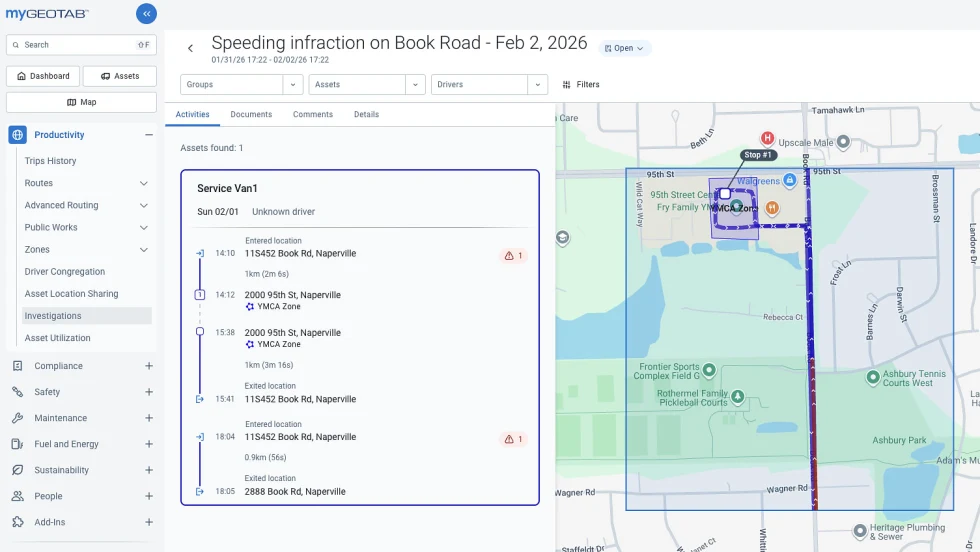
Geotab Launches Tool to Speed Fleet Incident Investigations
Geotab Investigations brings telematics data, video, photos, reports and other evidence into one case file to help fleets determine what happened and resolve incidents faster.
Read More →
Trump Administration Expands Homeland Security's Role in Trucking Enforcement
The administration's latest trucking crackdown goes beyond roadside inspections, expanding Homeland Security's role in commercial vehicle enforcement and investigations involving CDL training schools.
Read More →