




East Coast Port Launches $45M Electric Truck Push
The Port Authority of New York and New Jersey announced millions in incentives for zero-emission drayage trucks, yard tractors, and new charging hubs near the port.

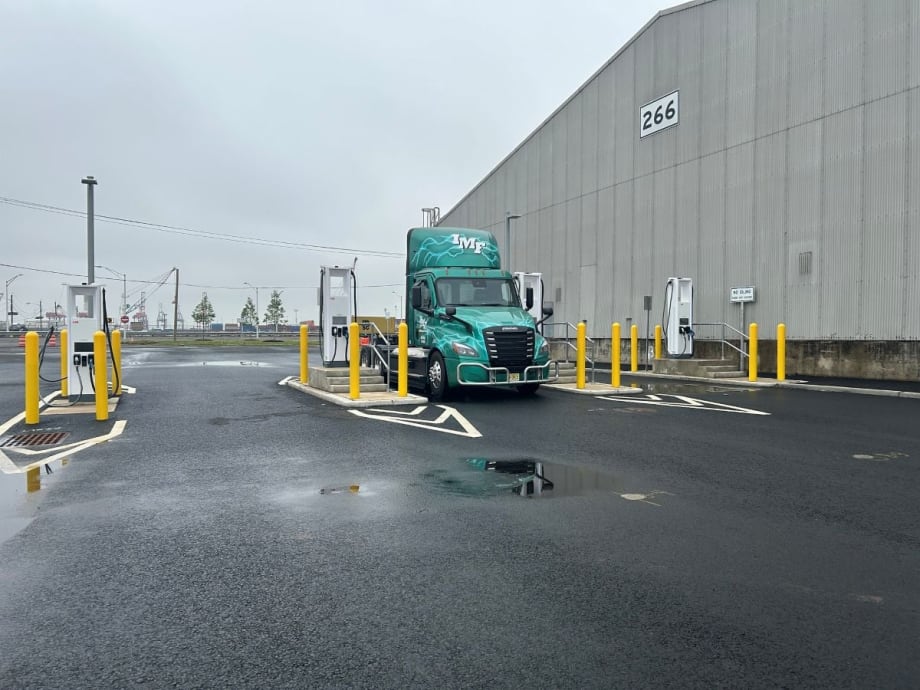
The new funding incentives are on top of existing zero-emission vehicle projects at the Ports of New York and New Jersey. In 2025, an electric-truck charging site was opened at Port Newark.
Photo: Port Authority of New York and New Jersey
The Port Authority of New York and New Jersey is launching $45 million in incentive programs aimed at helping drayage fleets and terminal operators put more electric trucks, yard tractors, and charging infrastructure into service.
Beginning this fall, Calstart will administer two zero-emission incentives programs at the ports: the Clean Truck Incentive Program and the Green Drayage Accelerator.
The Clean Truck Incentive Program will provide nearly $40 million in point-of-sale vouchers toward the purchase of zero-emission drayage trucks, yard tractors, and charging equipment.
A separate $5 million Green Drayage Accelerator program will support as many as five electric-truck charging hubs located within 10 miles of Port Authority seaport or marine terminal facilities.
Addressing Hurdles to Electric-Truck Drayage
The programs are intended to address two of the biggest barriers to deploying battery-electric trucks in drayage operations: the higher upfront cost of the vehicles and access to charging.
“Drayage operators are the backbone of this port, keeping freight moving day and night from our terminals to warehouses and businesses across the region,” said Port Authority Port Director Bethann Rooney.
“We know that any shift towards cleaner operations must happen through real support and partnership, rather than top-down mandates,” she said.
“We’re making zero-emission trucks and terminal tractors more affordable for the operators who keep this port running, backed by the charging infrastructure they'll need to power them.”
Incentives Pair Trucks With Charging
Calstart Executive Vice President Alycia Gilde said deploying zero-emission trucks at scale requires pairing vehicle incentives with reliable, high-capacity charging.
Calstart also will develop tracking dashboards for the programs to monitor vehicle deployments, vehicle performance, and charger use. The dashboards are expected to be transferred to the Port Authority in 2028.
The Port Authority and Calstart plan to reach out to the trucking community through in-person and online presentations in the coming weeks.
EPA Clean Ports Grant Funds Programs
The programs are being funded through a $451 million grant the Port Authority received through the Environmental Protection Agency’s Clean Ports Program.
That broader grant also will support electric cargo-handling equipment at marine terminals and shore-power infrastructure that will allow container ships to plug into the electrical grid while docked rather than running auxiliary engines.
The Port Authority has set a goal of reaching net-zero carbon emissions by 2050 and is encouraging trucking companies, terminal operators, ocean carriers and other businesses serving the port to work toward the same target.
The agency already operates a Truck Replacement Program that provides financial incentives for trucking companies replacing older trucks with cleaner models.
It also opened an electric-truck charging site at Port Newark in 2025 with four high-power chargers at the truck welcome center.
According to the Port Authority’s 2024 air emissions inventory, sulfur dioxide emissions at the seaport have fallen 98% from 2006 levels, while nitrogen oxide and particulate-matter emissions have declined more than 83%, even as cargo volume increased nearly 71%.
Editor's Note: Updated September 14, 2026, to correct a rounding error.
More Equipment

How Volvo Updated Its D13 for EPA 2027 [Watch]
Volvo’s updated D13 promises lower emissions without sacrificing performance or fuel economy. Take a closer look at what changed inside the engine in this HDT Spotlight video.
Read More →
Michelin Tire Improves Efficiency and Durability for Regional Fleets
The Michelin X Multi Energy D2 is a regional haul drive tire engineered to help fleets improve fuel efficiency, durability and traction in demanding stop-and-go operations.
Read More →
ZF Expands Commercial Vehicle Push in North America
ZF is expanding its North American commercial-vehicle presence with new transmission applications, electrification, trailer technology and autonomous-driving systems.
Read More →
Tesla Wants a Self-Driving Semi. Are Cameras Enough?
Could Tesla’s camera-only autonomous driving technology work on an 80,000-pound Semi? In this commentary, HDT's Deborah Lockridge takes a look at Tesla, Cybercab, and how autonomous trucks see the road.
Read More →
Kodiak: Driverless Long-Haul Truck Launch on Track for 2026
Kodiak AI says its driverless long-haul safety case is 93% complete and it remains on track to begin commercial operations by year-end 2026.
Read More →
What DOT’s Automated Vehicle Strategy Means for Trucking
The U.S. Department of Transportation issued a new automated-vehicle strategy that outlines plans for driverless-truck regulations, cross-state freight corridors, and federal safety standards.
Read More →
PlusAI Going Public to Fund Autonomous Truck Launch
A SPAC deal could provide PlusAI with up to $300 million as it works toward a 2027 commercial launch of factory-built autonomous trucks.
Read More →
NHTSA Moves to Rewrite Truck Fuel-Economy Rules
The National Highway Traffic Safety Administration says it lacks authority to regulate medium- and heavy-duty truck engines separately from complete vehicles, but the existing standards have not yet been eliminated.
Read More →
Detroit Opens Orders for EPA 2027 Engines
Detroit isn’t starting from scratch to meet EPA 2027 diesel emissions standards. Its Gen 6 DD13 and DD15 engines keep much of today’s platform while updating the fuel and aftertreatment systems.
Read More →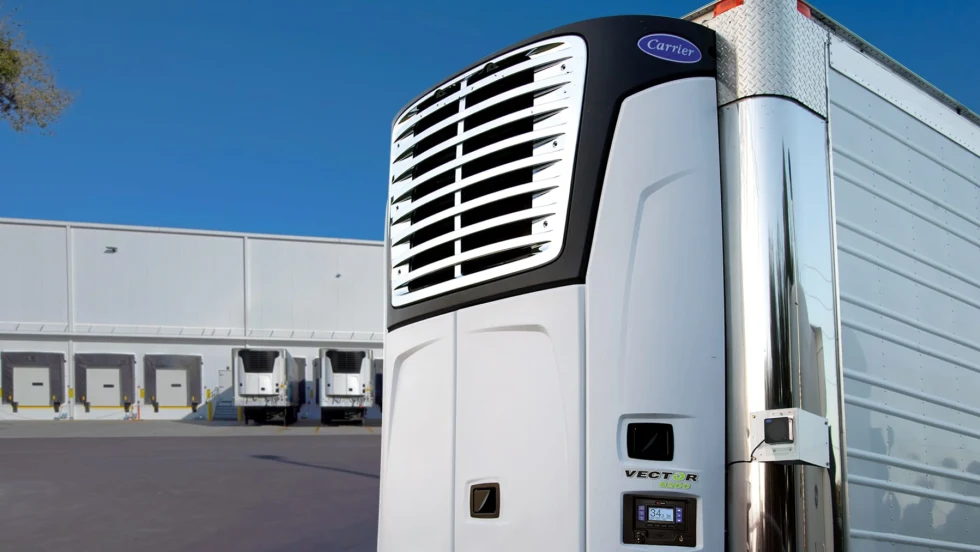
Carrier Transicold Adds All-Electric TRU for Stationary Cold Storage
Carrier Transicold’s new Vector 8200 all-electric transport refrigeration unit gives fleets a diesel-free option for temporary refrigerated and frozen trailer storage.
Read More →