





Every year brings change, but the shifts facing transportation cybersecurity in 2026 are neither minor nor abstract. They are already reshaping how freight operations are targeted and disrupted.
How Cybercrime Is Reshaping Cargo Theft and Fleet Risk in 2026
Artificial intelligence is changing how cybercriminals and cargo thieves target trucking fleets—and how fleets defend themselves. As phishing, impersonation, and cargo theft converge, cybersecurity is becoming a core part of fleet safety and operations.
February 4, 2026

The trucking fleets most prepared to ward off today's sophisticated threats are not those chasing the latest tools. They are the ones embedding cybersecurity into everyday operations.
5 min to read
- Artificial intelligence is influencing both cybercriminal strategies and how trucking fleets protect against cargo theft.
- The merging of phishing, impersonation, and cargo theft tactics highlights the growing importance of cybersecurity in fleet management.
- Cybersecurity is now integral to ensuring fleet safety and the efficient operation of trucking companies.
*Summarized by AI
For years, transportation cybersecurity was treated as an IT issue, separate from cargo theft, fraud, or day-to-day operations.
That’s not an option today. Cyber-enabled cargo crime, social engineering, and operational disruptions are not separate problems. They are different symptoms of the same threat environment.
Trucking Cybersecurity Can No Longer Be Discussed in a Vacuum
Most of the data management, communication, and operational systems supporting the way modern freight moves are deeply interconnected. While this is a plus for efficiency and capability, it also means that a compromise in one system can rapidly propagate across an organization or even between trading partners.
As a result, cybersecurity can no longer be discussed in a vacuum. It must be part of a broader transportation security conversation that treats cybersecurity, operational security, and physical security as inseparable components of resilience.
One of the clearest messages from the National Motor Freight Traffic Association 2026 Transportation Industry Cybersecurity Trends Report is that the adversaries targeting the transportation sector are no longer opportunistic amateurs or loosely coordinated criminal groups. They are professionalized, organized, and highly efficient criminal enterprises.
Modern cybercrime functions much like any other “as-a-service” model. Initial access brokers specialize in harvesting credentials through phishing and impersonation. Social engineering teams focus on manipulating employees into taking unsafe actions. Separate teams handle data exfiltration and extortion.
Each group plays a specific role in the attack lifecycle. This means attacks move faster and reach further than most people expect.
In 2025, the average breakout time (the window between initial access and lateral movement inside a victim environment) fell to just 18 minutes.
Eighteen minutes is all the time that defenders now typically have to detect an intrusion, figure out what is happening, and stop it from spreading. In reality, most manual processes can’t keep up.
This has serious implications for trucking fleets of all sizes. Manual detection and response processes just don’t cut it anymore. Automated, real-time monitoring is no longer “advanced.” In 2026, it’s the baseline.
AI Has Pushed Social Engineering to New Levels of Sophistication
Despite rapid changes in technology, one thing hasn’t changed: Social engineering is still the front door.
Phishing, impersonation, and identity abuse continue to be the most effective entry points for both cybercriminals and cargo thieves.
FMCSA account hijacking remains another critical risk. Compromised carrier identities can be used to fraudulently book loads, alter dispatch instructions, or redirect payments. The operational consequences are immediate and severe: stolen shipments, fraudulent bills of lading, and financial losses that extend well beyond the initial breach.
In fact, in late January, FMCSA warned motor carriers of an aggressive new phishing scheme.
What has changed is the sophistication of these attacks. Artificial intelligence has eliminated many of the warning signs employees once relied on. Today’s phishing emails are grammatically perfect, contextually accurate, and often tailored to specific roles within an organization.
Voice-based social engineering has also accelerated. Deepfake voice calls impersonating executives and support staff were documented repeatedly in 2025. These attacks exploit urgency and trust, pushing employees to bypass verification steps so they can keep freight moving.
Technology alone cannot stop social engineering. The most effective defenses against social engineering attacks continue to be role-based training, process validation, and clearly defined verification workflows that reflect how work actually gets done inside a fleet.
Today’s Cargo Thieves Are Also Cybercriminals
Today’s cargo thieves routinely use the same cyber-enabled techniques that traditional cybercriminals have relied on for years — and they are using them with devastating effectiveness. Stolen credentials, compromised dispatch systems, and manipulated digital records often precede physical theft.
Global Positioning System (GPS) spoofing has become a common tactic, allowing criminals to manipulate location data and conceal unauthorized route changes. Stolen credentials to tracking portals are used to track and target shipments in real time. Identity fraud enables criminals to impersonate legitimate carriers, brokers, or drivers with alarming credibility.
The result? Missing trailers that did not disappear because of an unfenced drop yard or a cut padlock. They disappeared because a digital identity was compromised days or weeks earlier.
This reality underscores why physical security controls alone are no longer sufficient. Cargo theft prevention must account for the digital systems and identities that govern how freight is tendered, tracked, and hauled.
How AI is Reshaping Cybersecurity
Artificial intelligence is rapidly reshaping the transportation sector, and cybersecurity is no exception. In 2026, AI will continue to act as a force multiplier for both attackers and defenders.
For adversaries, AI accelerates reconnaissance, phishing, and exploitation. Automated tools can scan the internet continuously for exposed systems, misconfigured application programming interfaces (APIs), or leaked credentials. Generative AI enables highly convincing phishing and impersonation campaigns at scale, reducing the effort required to target thousands of potential victims.
For defenders, AI can help — but only with strong oversight and clear visibility.
Behavioral analytics, anomaly detection, and automated response tools can dramatically reduce detection times, identifying subtle deviations in account behavior, data access, or vehicle telemetry that humans might miss.
The risk lies in assuming AI is a silver bullet. Poorly governed AI deployments will introduce new data exposure risks, particularly when sensitive operational data is fed into tools without clear controls. In 2026, fleets that benefit most from AI will be those that treat it as a force multiplier — not a replacement — for disciplined security programs and human expertise.
Being Resilient in the Face of New Security Threats
The cybersecurity challenges facing the transportation sector in 2026 are real, complex, and fast-moving. But they are not insurmountable.
The most resilient fleets are not those chasing the latest tools. They are the ones embedding cybersecurity into everyday operations, into role-based training that reflects real workflows, identity-first security models that protect accounts, not just devices. Incident response playbooks that are tested before a crisis occurs, not written after one.
Cybersecurity must be treated as part of safety, continuity, and operational reliability, not a separate technical function. When cyber, operational, and physical security are planned together, organizations are better positioned to detect threats early, respond effectively, and recover quickly.
The transportation sector has already shown its ability to adapt and collaborate in the face of complex challenges. Heading into 2026, that same collaboration, paired with a converged approach to security, will be the key to staying ahead of an increasingly professional and determined adversary.
Quick Answers
Trucking fleets are facing increased threats from phishing campaigns, impersonation attacks, and coordinated cyber attacks that target fleet operations and cargo security.
*Summarized by AI
Subscribe to Our Newsletter
More Fleet Management
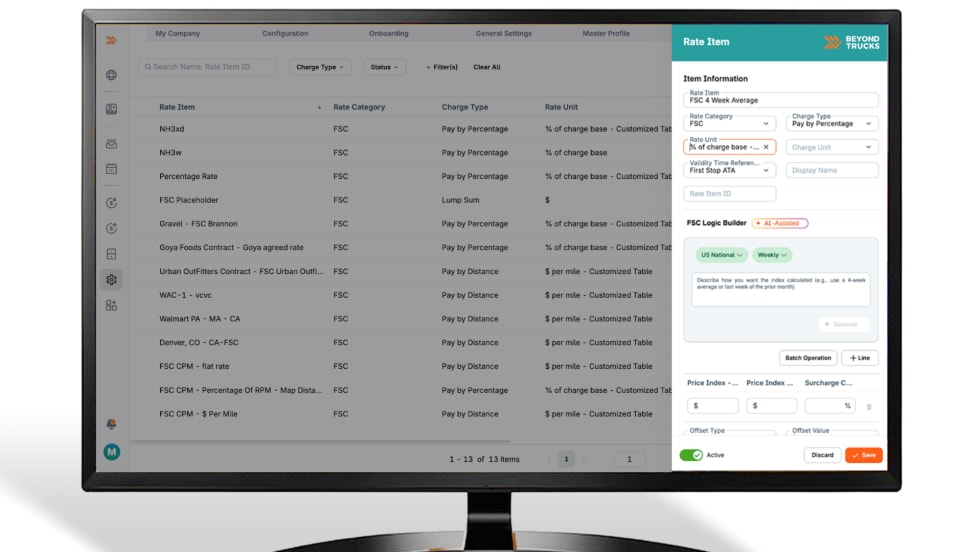
BeyondTrucks Targets Rate Complexity with New AI RateAgents
BeyondTrucks says its new RateAgents can turn plain-language rate logic into working code, starting with fuel surcharges — a critical but notoriously complex piece of carrier revenue.
Read More →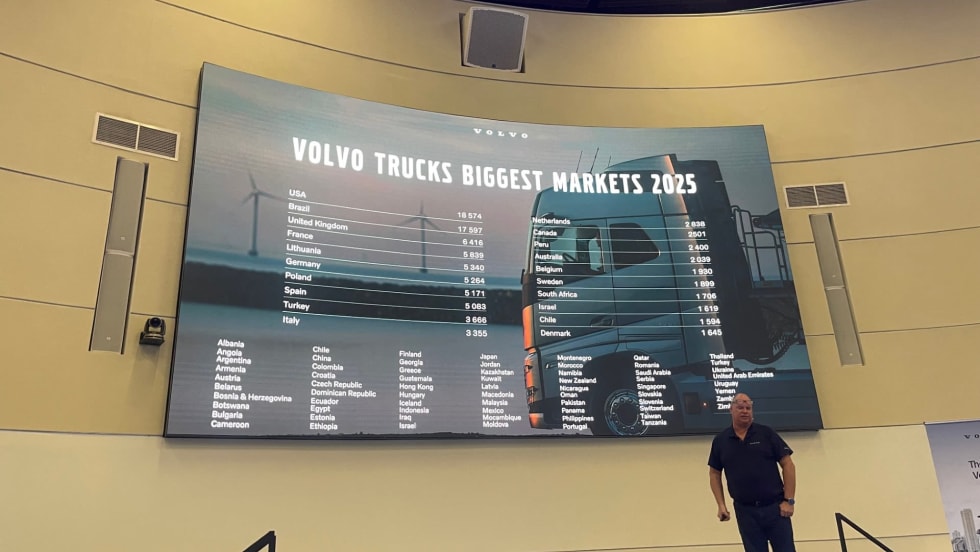
Volvo Sees Market ‘Tipping Point’ as New VNL Orders Surge
Soft freight conditions persist, but aging fleets, strong order intake, and new-product momentum signal a more optimistic second half of 2026, Volvo Trucks North America says.
Read More →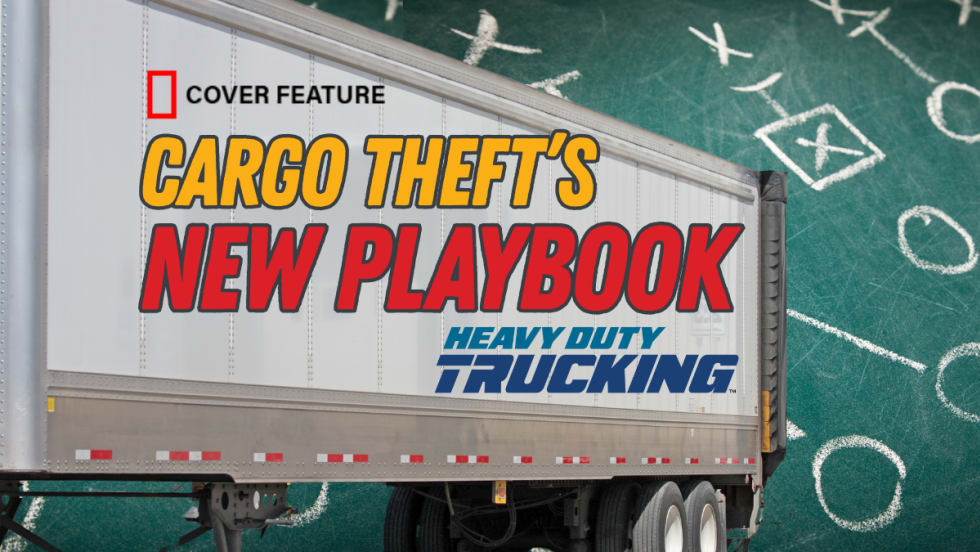
Cargo Theft’s New Playbook: Strategic Fraud, Double Brokering, and Cybercrime Hit Trucking
Cargo theft is evolving from regional smash-and-grab operations to sophisticated fraud schemes. Strategic theft now accounts for roughly a third of cargo crime, with incidents rising sharply in recent years. Here’s how the schemes work — and what fleets can do to protect themselves.
Read More →
HDT Honors the Best New Products of 2025 at TMC [Photos]
Heavy Duty Trucking's Top 20 Products awards recognize the best new products and technologies. Check out the award presentations at the 2026 Technology & Maintenance Council annual meeting.
Read More →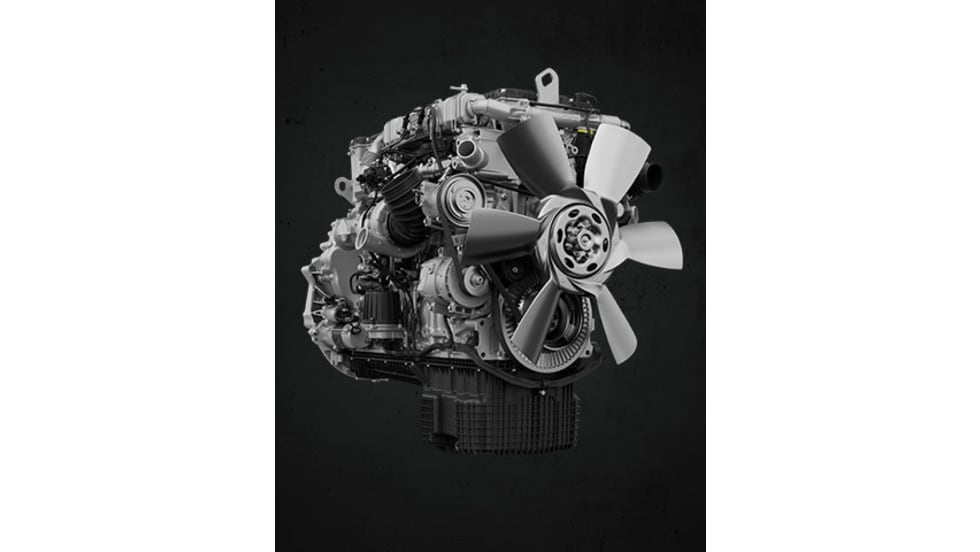
Sponsored•March 31, 2026
Detroit Engines: Trusted Performance, Built for What's Next
The Detroit® Gen 6 engine platform proves that real progress doesn’t require a complete redesign. Built on 20 years of trusted technology, these engines are designed for efficiency, stronger performance, and greater reliability than before. And they do it all while complying with 2027 EPA standards on every mile.
Read More →
Q&A: What's Real in Advanced Truck Tech? ACT Expo's Erik Neandross Weighs In
The 2026 ACT Expo is focusing heavily on what organizer Erik Neandross calls trucking's digital frontier. This interview excerpt dives into artificial intelligence, zero-emission vehicles, and tips to make sense of it all.
Read More →
Trucking's Digital Frontier: AI, Connected Vehicles, Alternative Fuels and More
There's an amazing amount of new technology for trucking out there. For fleets, the challenge is figuring out what’s real, what’s hype, and what’s worth investing in.
Read More →
What's Real in Advanced Truck Technology? ACT Expo's Erik Neandross Weighs In
Artificial intelligence, the software-defined vehicle, telematics, autonomous trucks, electric trucks and alternative fuels, and more in this HDT Talks Trucking interview
Read More →
ACT: Trucking Volumes Rise, Capacity Tightens as Fuel Prices Cloud Outlook
ACT Research data shows volumes hitting a four-year high and supply-demand balance strengthening, but higher oil prices are undercutting tariff relief and tempering optimism.
Read More →
Wabash Teams Physical Security With Digital Tech For Better Cargo Visibility
The patent-pending cargo solution integrates a digitally connected cargo door and an intelligent locking system with the TrailerHawk.AI technology platform.
Read More →