




Commentary: How Smart is SmartWay?
Can we depend on the fuel-saving numbers provided by the U.S. Environmental Protection Agency’s SmartWay program? Executive Contributing Editor Rolf Lockwood says he's not so sure, in the aftermath of a recent test results story.


Can we depend on the fuel-saving numbers provided by the U.S. Environmental Protection Agency’s SmartWay program?
Frankly, I’m not so sure.
I’ve long feared what I saw as inevitable: that SmartWay, which bills itself as a public/private collaboration between the EPA and the freight transportation industry that helps improve fuel efficiency, would become the default specifier of on-highway sleeper trucks and van trailers in North America.
And it’s happened. If the truck or the tire or the gizmo of whatever sort isn’t SmartWay-approved, the broad perception is that it simply isn’t good enough. There are shippers that demand to see the SmartWay logo on the rigs that haul their goods, and I’ve heard tales of carriers gluing that logo on trucks that never saw the benefit of approval. Worse, it’s now effectively a fence barring entry to California – no SmartWay certification, no entry. The pressure on many fleet operators is huge.
There isn’t a trucking operation on the entire planet that doesn’t want to save fuel, so in theory buying a SmartWay-verified product makes perfect sense.
But again, can we believe in what SmartWay approves?
That question is prompted by the recent testing of trailer aerodynamic devices by the Performance Innovation Transport group, a not-for-profit engineering and research outfit that works out of the Transport Canada test track in Blainville, Quebec. I believe it’s above reproach.
I won’t repeat all the details here, but it comes down to this: PIT recently announced the results of its evaluations on trailers equipped with three undercarriage aerodynamic devices, often called “undertrays.” They consumed just 1.43% less fuel on average than the same trucks without them, in a range from 0% to 2.2%. (PIT doesn’t divulge the results of individual products, except to members.)
With those results, none of the three undertray deflectors could achieve SmartWay verification, which demands a minimum 5% improvement. Yet two of them already had it before the PIT testing was done. And there’s the rub.
How can separate on-track tests done to the strict regime imposed by the SAE/TMC J1321 standard yield such different results? Are such tests not comparable if done at different tracks? And if not, then what does SmartWay verification really mean?
Equipment Editor Jim Park and I have been talking to all and sundry about this, including some of the manufacturers involved in the testing and fleets who have years of experience with trailer aerodynamics. But we still don’t have satisfactory answers.
SmartWay does none of its own testing, a key point here, relying on manufacturers to present test results from approved test facilities. But if those facilities don’t agree, what are we left with?
Many fleets say it doesn’t matter, because they don’t believe the numbers anyway. Some say when evaluating products and specs, they routinely cut fuel-saving percentage claims in half no matter what the source. Many say they spec SmartWay-approved products only in order to get into California.
One of the manufacturers involved in all this told me that SmartWay just provides a suggestion as to what works and what doesn’t, a spec’ing direction.
Not good enough, I say, certainly not if SmartWay is the default arbiter of what’s acceptable and what isn’t.
Incidentally, the third undertray-maker in the recent PIT testing, and I know it’s the one that scored 2.2%, is the only one of the three that can’t claim SmartWay certification. It has results from another test track showing a 5% gain in fuel economy – and guarantees it to buyers – but that track isn’t on SmartWay’s list of acceptable facilities so it won’t grant verification.
All of which shows that these waters are as about as muddy as water gets. And if you weren’t cynical before, you might be now. Just like me.
Read more at www.truckinginfo.com/PIT-undertray.
Rolf Lockwood is vice president, editorial, at Newcom Business Media, which publishes Today’s Trucking. He writes for HDT each month on the making, maintaining and using of trucks.
More Equipment

How GP Transco Cuts Trucking Fuel Costs, a Tenth of a Gallon at a Time
What’s another tenth of a mile per gallon worth? GP Transco shares how equipment upgrades and driver coaching turn small gains into meaningful fuel savings.
Read More →
Electric Yard Tractors Move Beyond Pilots
Operating-cost savings have overtaken sustainability goals as the leading reason surveyed fleets are adopting battery-electric terminal tractors, according to new NACFE research.
Read More →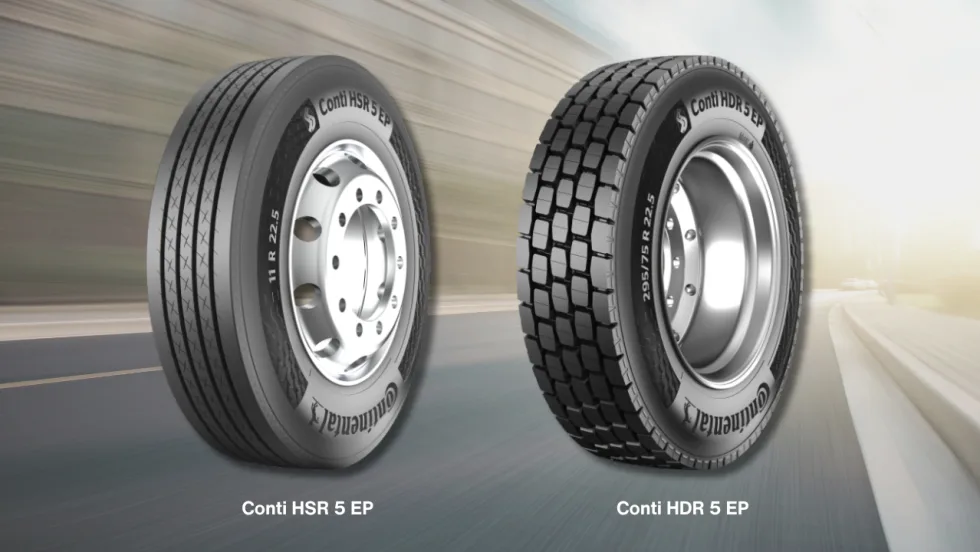
Continental Introduces New Regional Truck Tires
Continental says its new Generation 5 steer and drive tires for regional operations offer longer tread life, with estimated mileage gains of 22% and 19%, respectively.
Read More →
Tekmodo Introduces CargoBright Brand for Translucent Trailer Roofs
CargoBright is designed to diffuse daylight across the cargo area while performing as a working vehicle roof.
Read More →
Fleet Economics Shape Electric Truck Outlook
ACT Research expects costs, charging infrastructure, and technology improvements to drive zero-emission commercial vehicle adoption as federal regulations and incentives retreat.
Read More →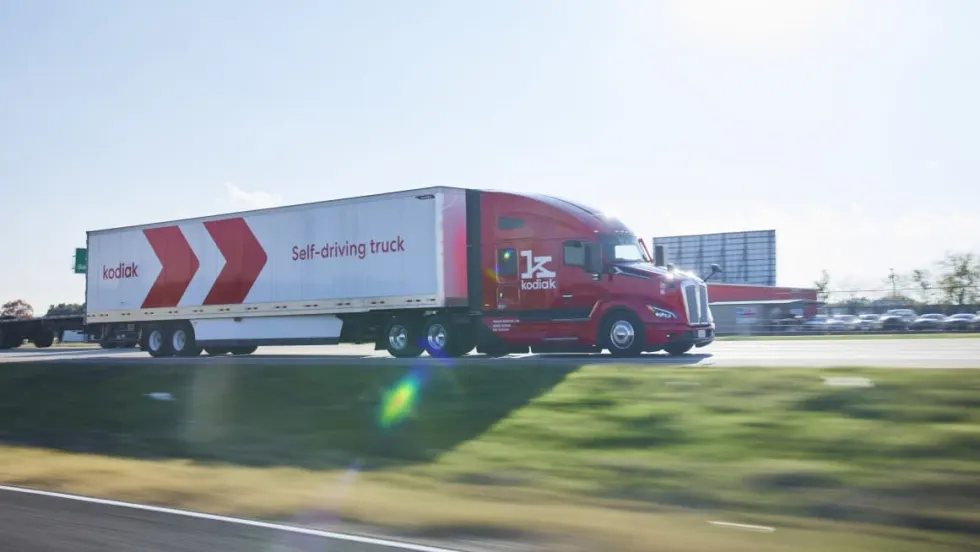
Kodiak Targets Dallas–Houston for Driverless Trucks
The company says its autonomous trucks are completing the I-45 run without a safety observer taking control. It plans to remove the observer by the end of 2026.
Read More →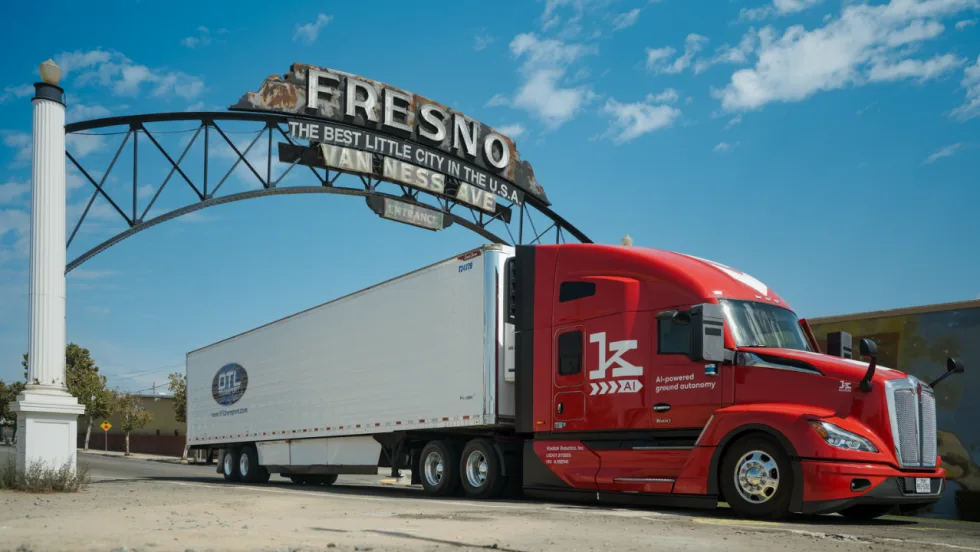
Kodiak Hauls Produce in California Autonomous Truck Pilot
Kodiak AI and DTL Transport have begun hauling produce between Fresno and Los Angeles under California’s new rules for testing heavy-duty autonomous trucks. A safety driver remains behind the wheel.
Read More →
Used-Truck Remarketing Math Is Changing
Used-truck value is no longer just a concern at trade-in. Decisions made throughout a truck’s first life can influence what it’s worth years later.
Read More →
How Volvo Updated Its D13 for EPA 2027 [Watch]
Volvo’s updated D13 promises lower emissions without sacrificing performance or fuel economy. Take a closer look at what changed inside the engine in this HDT Spotlight video.
Read More →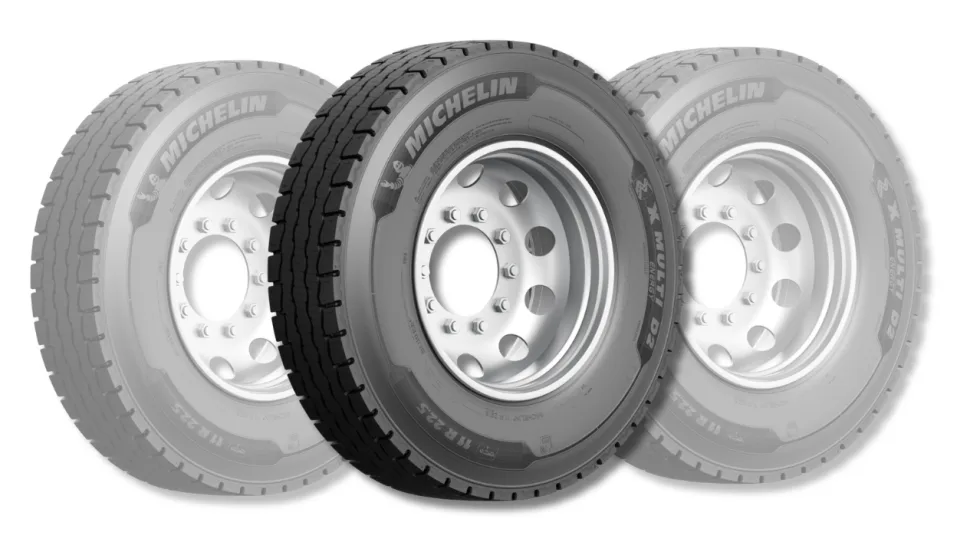
Michelin Tire Improves Efficiency and Durability for Regional Fleets
The Michelin X Multi Energy D2 is a regional haul drive tire engineered to help fleets improve fuel efficiency, durability and traction in demanding stop-and-go operations.
Read More →