





The Commercial Vehicle Safety Alliance issued new inspection guidance aimed at cracking down on falsified records of duty status (RODS, more commonly known as driver logs) and electronic logging device tampering.
CVSA Issues New Inspection Guidance on ELD Tampering, False Logs
New guidance for commercial vehicle inspectors distinguishes between more traditional logbook violations and tampered ELD data that can result in mandatory 10-hour out-of-service orders.
March 3, 2026
Commercial vehicle inspectors have new guidance on placing drivers out of service for falsified log violations.
Credit:
HDT Graphic/CVSA
3 min to read
The bulletin, effective April 1, outlines how inspectors should handle altered logs of driver hours of service.
The move comes ahead of CVSA's annual Roadcheck in May (where ELDs are a focus this year) and as the Federal Motor Carrier Safety Administration has been taking steps to crack down on fraudulent ELDs.
More traditional false log violations, such as misuse of personal conveyance or failure to log into the ELD, are typically easier for inspectors to detect.
If a driver is over hours at the time of inspection, CVSA explains, inspectors can usually determine how much rest was actually taken and whether the driver should be placed out of service.
ELD Tampering
More concerning, CVSA says inspectors are encountering RODS (records of duty status) that have been reengineered, reprogrammed or otherwise tampered with, and the bulk of the four-page guidance document is devoted to this topic.
These violations are harder for inspectors to identify and harder to determine whether drivers should be placed out of service.
CVSA gives an example of fraudulent use of driver credentials. A motor carrier created a fictitious ELD account using the same driver’s name but slightly altered credentials — such as changing a letter from uppercase to lowercase and modifying one digit in the CDL number.
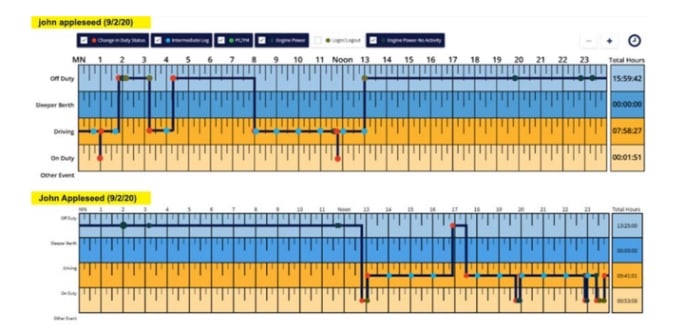
The fraudulent use of driver credentials is an unauthorized alteration of the ELD and therefore considered tampering. This example shows a motor carrier creating a fictitious driver ELD account.
Credit:
CVSA
The driver alternated between the two accounts to continue driving after exceeding hours-of-service limits.
In another example cited by CVSA, a driver was shown as off duty in Tolleson, Arizona, at 9 p.m. on Aug. 10, 2024. However, a fuel receipt placed the driver in Strafford, Missouri, on Aug. 11 — more than 1,300 miles away.
Further review showed the RODS had been shifted back three days, concealing nearly 21 hours of driving time.
When Should Drivers Be Placed Out of Service for ELD Violations?
CVSA says the goal in enforcing ELD violations is to only place drivers OOS who pose an imminent hazard.
When it is possible for the inspector to determine when the falsification occurred, and the driver is not over hours at the time of inspection, CVSA tells inspectors to cite drivers under § 395.8(e)(1) and allow the driver to proceed.
If this is the case and a driver is over the HOS limits at the time of inspection, however, the driver should be placed out of service until he or she is eligible to drive again under hours-of-service rules.
For drivers whose RODS have been reengineered, reprogrammed or tampered with, and the ELD does not accurately record or retain required data, inspectors face a tougher job.
These altered logs may show no indication in the event details that any changes were made.
In such cases, inspectors must compare supporting documents, such as fuel receipts, to what's in the ELD record. Because the actual time, duration, and location of rest breaks cannot be determined, enforcement becomes more serious.
If it's not possible for the inspector to determine when driving occurred, CVSA says, the inspector should cite a § 395.8(e)(2) violation and place the driver out of service for 10 consecutive hours.
More Safety & Compliance
HDT Honors the Best New Products of 2025 at TMC [Photos]
Heavy Duty Trucking's Top 20 Products awards recognize the best new products and technologies. Check out the award presentations at the 2026 Technology & Maintenance Council annual meeting.
Read More →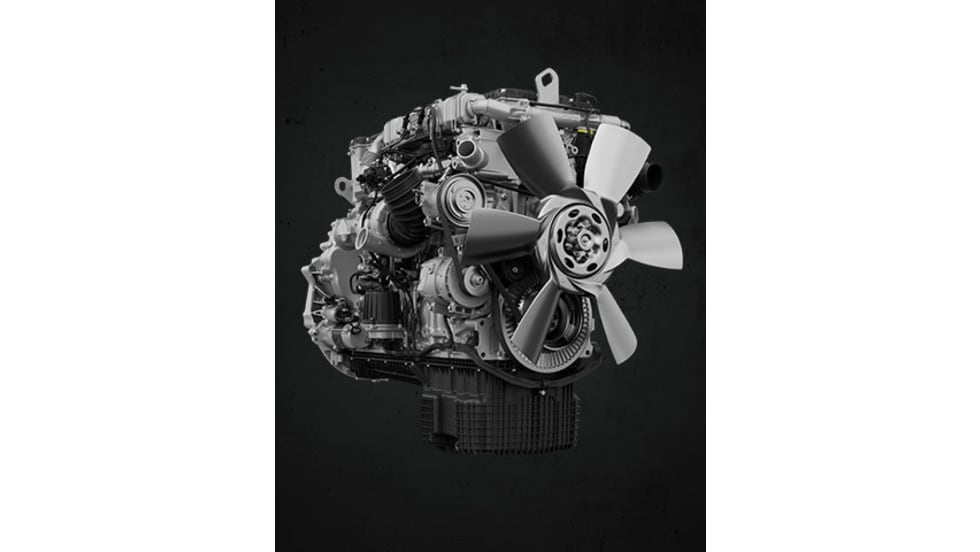
Sponsored•March 31, 2026
Detroit Engines: Trusted Performance, Built for What's Next
The Detroit® Gen 6 engine platform proves that real progress doesn’t require a complete redesign. Built on 20 years of trusted technology, these engines are designed for efficiency, stronger performance, and greater reliability than before. And they do it all while complying with 2027 EPA standards on every mile.
Read More →
Aperia Expands Halo Platform with Steer-Tire Inflation System, Fifth-Wheel Integration
Aperia Technologies introduced a new automatic tire inflation system for steer axles and a partnership with Fontaine Fifth Wheel to integrate coupling status into its Halo Connect platform.
Read More →
Fleetworthy and HAAS Alert Expand Partnership Stopped Truck Protection Alerts
Fleetworthy and HAAS Alert expanded their partnership to deliver real-time digital alerts that warn motorists when commercial trucks are stopped roadside and notify truck drivers when approaching emergency responders.
Read More →
New Entrants, Chameleon Carriers, and Safety: Is It Too Easy to Start a Trucking Company?
More than 100,000 new trucking companies enter the industry each year, but regulators manage to audit only a fraction of them. That churn creates opportunities for inexperienced startups — and for “chameleon carriers” that shut down after safety violations and reappear under new identities. Read more from Deborah Lockridge in this commentary.
Read More →
Mack Introduces Mack Protect Collision Mitigation System for MD Series
Mack Trucks has expanded its proprietary Mack Protect collision mitigation platform to the Mack MD Series, bringing heavy-duty safety technology to medium-duty trucks operating in urban and regional environments.
Read More →
Smarter Maintenance Strategies to Keep Trucks Rolling
In today’s cost-conscious market, fleets are finding new ways to get more value from every truck on the road. See how smarter maintenance strategies can boost uptime, control costs and drive stronger long-term returns.
Read More →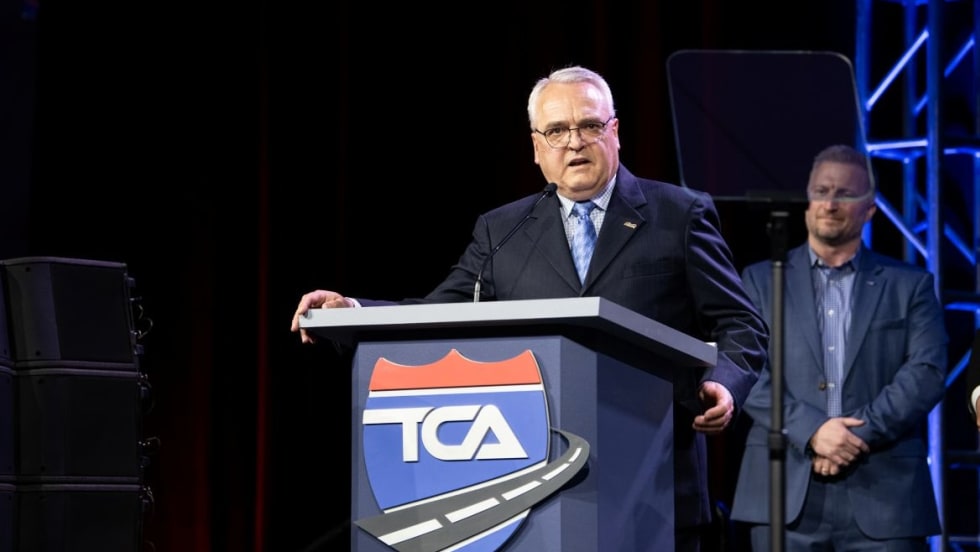
Bison Transport, Mill Creek Motor Freight Win TCA Fleet Safety Awards Grand Prize
Two Canadian fleets earned the Grand Prize in the Truckload Carriers Association’s 2025 Fleet Safety Awards, recognizing the industry’s top safety performance based on accident frequency and safety programs.
Read More →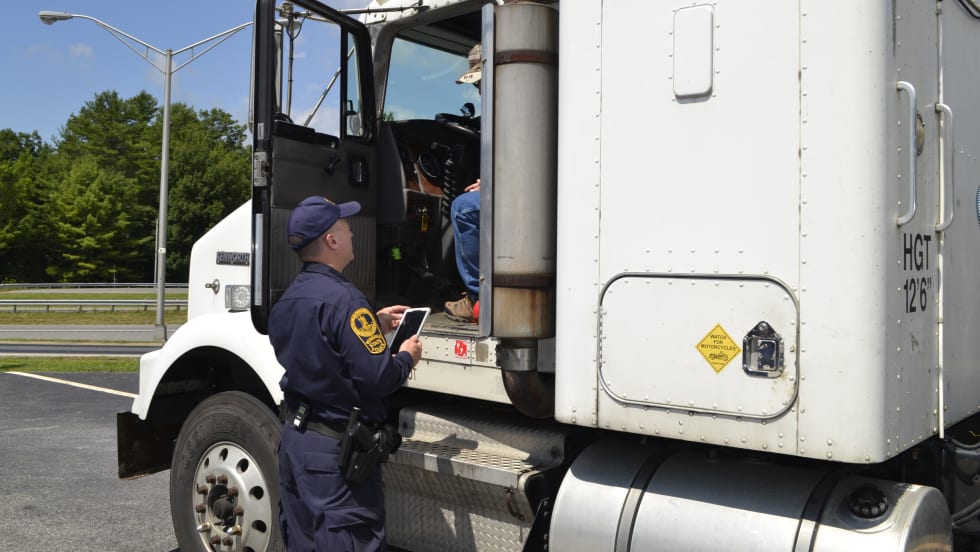
FMCSA Reinstates Field Warrior ELD to Registered Device List
One electronic logging device has been reinstated to the FMCSA's list of registered ELDs.
Read More →
Daimler Truck North America Adds 360-Degree Exterior Camera System to Vocational, Medium-Duty Trucks
Daimler’s new factory-installed system integrates side and forward-facing cameras with in-cab touchscreen to improve jobsite visibility and reduce upfit complexity.
Read More →