




New PC-12 Diesel Engine Oil Category Nears Completion: What Fleets Should Know
API Formally Approves Next-Gen Engine Oil Category for 2027 Engines
Heavy-duty engine oil marketers can begin finalizing formulations and preparing product packaging to meet the new oil specifications ahead of the January 1 licensing date.
April 9, 2026
API's voluntary Engine Oil Licensing and Certification System is the process for developing new engine oil performance standards.
Credit:
HDT Graphic
2 min to read
The next-gen heavy-duty engine oil standard (PC-12) has been formally approved, announced the American Petroleum Institute, which also introduced the new CL-4 and FB-4 “donut” certification marks ahead of 2027 model-year engines.
This means oil marketers can begin finalizing formulations and preparing product packaging to meet the new specifications ahead of the first licensing date of January 1, 2027.
The new engine oil specifications are designed to prepare the heavy-duty engine oil marketplace for next-generation performance standards.
The newest diesel engines need oils with:
- Improved oxidation resistance
- Enhanced wear protection
- Expanded elastomer compatibility
- Improved aftertreatment system protection
- Support for lower viscosity grades aimed at improving fuel economy.
Some of the improvements could benefit older engines as well.
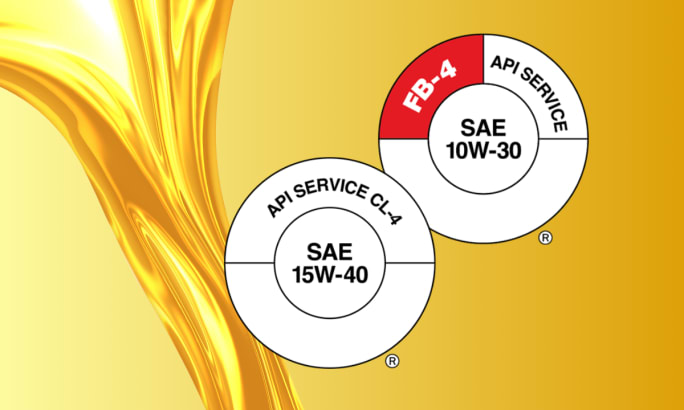
The API licensee portal for the new oil categories will open on June 1, 2026.
Credit:
HDT Graphic/API
For instance, improved oxidation stability, which helps engine oil resist breakdown at high temperatures, can help maintain oil quality over longer service intervals. That could help trucking fleets extend their oil drain intervals.
Additional wear-protection tests built into the category could also benefit older engines.
A Strong Technical Foundation
“To support the next generation of heavy-duty engine technology and emissions standards, PC-12 establishes a strong technical foundation for performance, durability, and environmental protection,” said Bill O’Ryan, director-EOLCS/DEF with API.
“Making the CL-4 and FB-4 service symbols available now allows oil marketers to prepare for a smooth transition as we approach the 2027 model year.”
To further support industry readiness, the API licensee portal will open on June 1, 2026. This early-access period will allow licensees to proactively enter new API CL-4 and API FB-4 products into the system.
API's Oil Licensing and Certification Process
The new standard will be incorporated into API 1509, the Engine Oil Licensing and Certification System (EOLCS) document.
API 1509 describes the voluntary API EOLCS program, the process for developing new engine oil performance standards, and the requirements for licensing and proper use of the API marks.
The document also outlines aftermarket audit and enforcement procedures to help ensure that products licensed as meeting API standards continue to satisfy those requirements in the marketplace.
More Maintenance
New Agentic Predictive Maintenance Report Demonstrates How Degraded Aftertreatment Systems Waste Fuel
Questar analyzed a large mixed-class fleet and discovered it was wasting as much as $30 in fuel per vehicle, per day, because of mechanically degraded aftertreatment systems.
Read More →
Mack, Volvo Issue ‘Do Not Drive’ Recall on Possible Wheel-Offs
Owners will be sent advance notice not to operate their affected vehicles until the remedy is performed.
Read More →
Why Fleet Data Matters More Than Ever at Waste Connections [Watch]
Waste Connections' Chuck Palmer explains how telematics, predictive maintenance, safety analytics, and AI help keep vehicles on the road and drivers safe in this episode of HDT Talks Trucking.
Read More →
Sponsored•June 1, 2026
How to Prevent Summer Truck Cooling System Failures
Summer heat puts heavy-duty truck cooling systems under intense strain. Learn how preventive maintenance and accurate repair information can help reduce downtime.
Read More →
Deadline Extended for HDT Truck Fleet Innovators Nominations
Heavy Duty Trucking has extended the deadline for nominations for its Truck Fleet Innovators awards. The deadline has been extended to May 22.
Read More →
Why VMRS Is the Natural Link Between AI, Predictive Analytics, and Vehicle Repairs [Commentary]
Jon White was a leading figure in the development of VMRS. Now, after five decades of service, White says VMRS is becoming essential to the AI-driven future of truck maintenance.
Read More →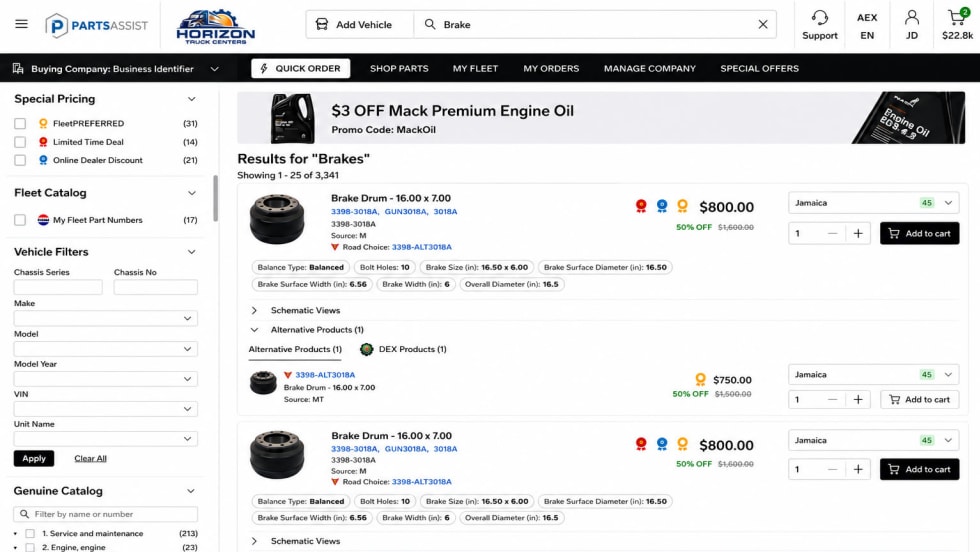
Mack Trucks Revamps PartsASIST Platform with Faster Performance, Improved Navigation
Mack Trucks has launched a redesigned version of its PartsASIST online ordering platform, adding faster search, real-time inventory visibility and enhanced order tracking.
Read More →
International Debuts ‘My International’ Connected Platform to Centralize Fleet Data, Service, and Dealer Communication
International’s New digital ecosystem unifies telematics, maintenance, and dealer interaction into a single interface, aiming to reduce downtime and deliver predictive fleet insights.
Read More →
Saving Fuel at the Wheel End
Wheel ends are often overlooked in the quest for better fuel economy. But Joshua Kucera, product manager, Stemco, warns that neglecting wheel ends can reduce fuel economy and increase maintenance headaches.
Read More →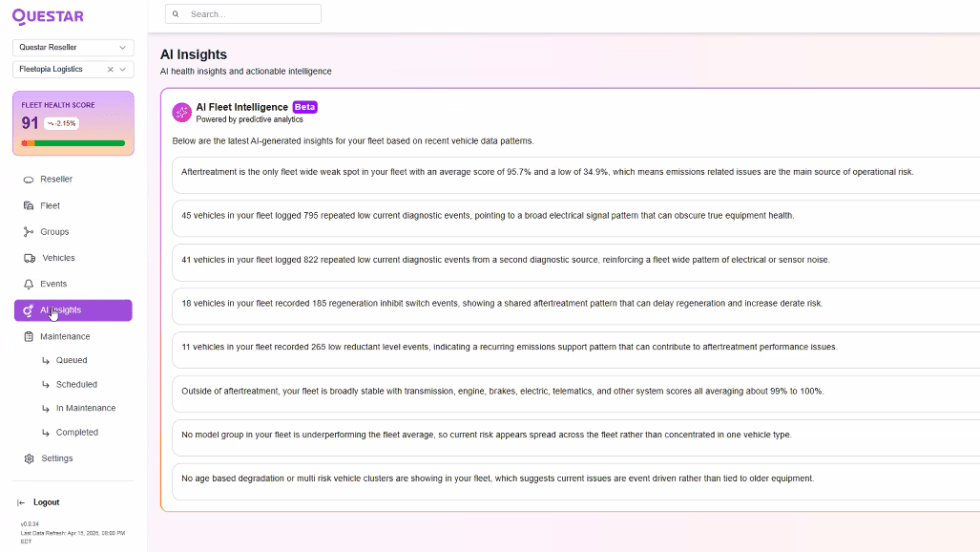
Beyond Predictive: Questar Adds AI-Driven Repair Recommendations to Fleet Maintenance
Questar’s latest maintenance platform uses AI to flag potential failures, recommend repairs, and estimate the cost of waiting, helping fleets prioritize maintenance and save money and downtime.
Read More →