



More in This Series
Beyond the Spot Rate Spike: What Freight Capacity and 2026 Look Like for Trucking
Will FMCSA’s Driver-Oriented Enforcement Initiatives Affect Capacity?
 MENU
MENU SEARCH
Trucking’s biggest technology shifts in 2026 have one thing in common: artificial intelligence.
From freight workflows and shop efficiency to cybersecurity and autonomy, what trucking companies need to know about technology trends in 2026.
HDT Graphic
Artificial intelligence, particularly the rise of conversational or generative AI, was one of the biggest trends of 2025, and trucking is no exception. And AI is intersecting with other trucking technology trends, such as cybersecurity, cargo theft, and autonomous trucks.
“In the 21st century, we’re used to technology advancing at a rapid pace,” DAT Freight & Analytics said in its 2026 Freight Focus report. “But every so often, tech makes a giant leap forward, and 2025 was one of those years.
“We’ve seen it in the explosion of AI, the momentum in automated vehicles, and technologies specifically designed to do more and do it faster. The ripple effects of these advancements will be felt throughout 2026, and businesses have spent the past 12 months positioning themselves either to seize new opportunities or to avoid being left behind.”
Embracing technology is no longer optional. DAT predicts that AI can be a competitive advantage for trucking companies in 2026.
“Technologies that improve cash flow, deliver the visibility customers expect, and maximize utilization will be essential.”
Modern transportation management systems and telematics platforms increasingly embed AI to improve utilization, routing decisions, safety, truck diagnostics and predictive maintenance, and more.
AI agents, or agentic AI, can help motor carriers and brokers by taking over redundant or repetitive tasks, such as billing, document management, price quotes, scheduling, and vetting carriers or brokers.
Earlier this year, for instance, C.H. Robinson announced it had performed over 3 million shipping tasks with its fleet of generative AI agents – proprietary tech tools the global logistics provider has built to automate steps across the lifecycle of a shipment.
“That’s 3 million manual tasks our people didn’t have to do,” said Arun Rajan, chief strategy and innovation officer for the giant tech-enabled logistics company.
Technology and data are driving increased collaboration between shippers and carriers, according to Jeff Pape, general manager of transportation for U.S. Bank. The company is working on pilot programs that leverage AI capabilities in its solution for both carriers and shippers, including proof-of-delivery document verification and data validation.
“We all know there's a lot of transactions, there's a lot of volume that goes through the freight space, especially the truckload space,” Pape said. “How do we take that high volume of repetitive activity and leverage technology to help make those decisions, allowing companies to redeploy resources and manage true exceptions?”
AI is also driving the increased use of trailer pools and power-only offerings. C.H. Robinson’s recent upgrade to its Drop Trailer Plus program combines advanced telematics data and artificial intelligence to help trucking companies manage trailer pools more efficiently.
Wabash expanded its Trailer-as-a-Service program in 2025, powered by TrailerHawk.ai, which combines advanced technology, operational expertise, and cargo assurance to manage trailer replenishment, staging, repositioning, and utilization.
AI is also exploding in equipment-based tools, such as in-cab camera systems, driver communication, and predictive maintenance in the shop.
As artificial intelligence moves from hype to practical deployment, trucking fleets are beginning to use AI-driven maintenance systems to improve shop efficiency, reduce downtime, and enable predictive maintenance, as we report in HDT’s February 2026 Digital Cover Feature.
Faced with labor shortages and more complex vehicles, fleets and service providers are turning to automation, remote diagnostics, and AI to close the gap, according to a Noregon white paper.
Noregon sees accelerating adoption of these technologies as one of the defining trends of 2026. Remote diagnostics reduce unnecessary shop visits. Automated workflows cut administrative time. And AI-driven insights help technicians identify root causes faster and avoid misdiagnosis.
AI-powered maintenance systems are making a significant impact on fleet operations, said David Begin, marketing director at DataDis, a fleet maintenance software developer and supplier.
“The industry has moved past AI being a buzzword at industry trade shows,” he said. “Many key players in the maintenance technology space have released tangible AI tools that fleets are using to improve.”
These tools can provide fleets with predictive maintenance applications, AI-driven invoicing, parts ordering and inventory optimization, and deeper, AI-driven analytics.
While the increasing adoption of artificial intelligence and AI-enabled technologies has improved efficiency and enabled companies to detect and respond to cyber attacks, it has also introduced significant new security challenges, according to the National Motor Freight Traffic Association’s 2026 Transportation Industry Cybersecurity Trends Report.
“Throughout 2025, cybercriminal activity demonstrated a new degree of sophistication and increased specialization,” NMFTA reported.
“Entering 2026, the North American transportation sector faces the most complex and dynamic cyber threat environment in its history.”
“The convergence of traditional cargo theft, cybercrime, and operational disruptions has transformed trucking cybersecurity from an IT issue into a full-spectrum operational resilience challenge,” according to NMFTA.
The new cybersecurity threat landscape no longer affects only back-office systems, but also physical operations and cargo integrity.
Cybersecurity and AI are also creating a new generation of cargo thieves. Cargo theft activity across North America held relatively steady in 2025 — but the financial damage did not, as ever-more-sophisticated organized criminal groups shifted their cargo theft focus to higher-value shipments and sophisticated strategic theft tactics, according to CargoNet.
Truckstop.com’s Todd Waldron says one trend that has affected the transportation environment and will continue to do so in 2026 is the increase of strategic cargo theft “through a variety of fraud tactics that have blown up over the last two years.”
“Cargo theft in the United States fundamentally changed between 2020 and 2022,” said Scott Cornell, chair of the Transported Asset Protection Association, or TAPA Americas, in an interview with HDT Talks Trucking.
“A good portion of cargo theft being conducted in the United States right now is driven by these very large, sophisticated, organized crime rings that are operating from dozens of different countries,” said Cornell, who has been doing cargo theft investigations for over 30 years in supply chain security.
“And their preferred method is strategic theft, which always starts with the use of deception to trick a member of the supply chain into giving them the freight unknowingly but willingly.”
Although adoption of autonomous trucks is taking longer than originally expected, the technology is here and in the field, with Texas emerging as a hotbed of real-world deployment on selected routes.
Regulatory expert Brandon Wiseman told HDT Talks Trucking, “We are getting to a point where we have to come up with some rules on autonomous trucks. The technology is obviously progressing very quickly in that arena. And right now, we have no [federal] regulations on the books whatsoever governing the operation of autonomous trucks in the country.”
Transportation Secretary Sean Duffy highlighted autonomous vehicle policy as a major focus of his transportation agenda, stressing the need for clear regulations that balance safety and innovation. Federal policy is moving toward a national standard that could make it easier to deploy autonomous trucks across state lines, rather than a patchwork of state rules.
As HDT’s Jack Roberts reported in early January, McKinsey & Company sees autonomous trucking as one of the few areas in the commercial vehicle space where momentum is building.
In a roundtable discussion with trucking journalists at CES 2026 in Las Vegas, McKinsey partner Moritz Rittstieg said autonomous trucking technology is advancing faster than it has in years.
Commercialization is tightening around a small set of lanes, mostly in the American Southwest. And, he said, investors once again are very interested.
Even with all that positive news, Rittstieg kept coming back to the same fulcrum point: The economics of autonomous trucking must work for fleets. Because fleets, not venture capitalists, ultimately have to scale this technology and make it work in real-world freight-hauling applications.
In addition, we’re seeing more companies looking beyond the autonomous technology developers themselves, what Rittstieg called the “second-order effect.”
Companies and investors are beginning to consider the other elements that must be in place for autonomous trucking to scale: support infrastructure, fleet management platforms, and service ecosystems for autonomous trucks.
“When an industry is purely hype,” he said, “everybody invests in the shiny object. When an industry starts to look real, money starts flowing into the plumbing."

As the pace of change accelerates in trucking, the fleets that adapt best have more than the latest technology. They have cultures that embrace improvement.
Read More →
When it gets harder for a freight broker to prove they are financially sound, the ones who cannot clear that bar get pushed out of the market. And those are exactly the brokers who used to leave motor carriers holding the bag.
Read More →
For trucking, the bridge opening should offer immediate improvements in efficiency and reliability, with new customs facilities, expanded inspection capacity, and direct freeway-to-freeway connections.
Read More →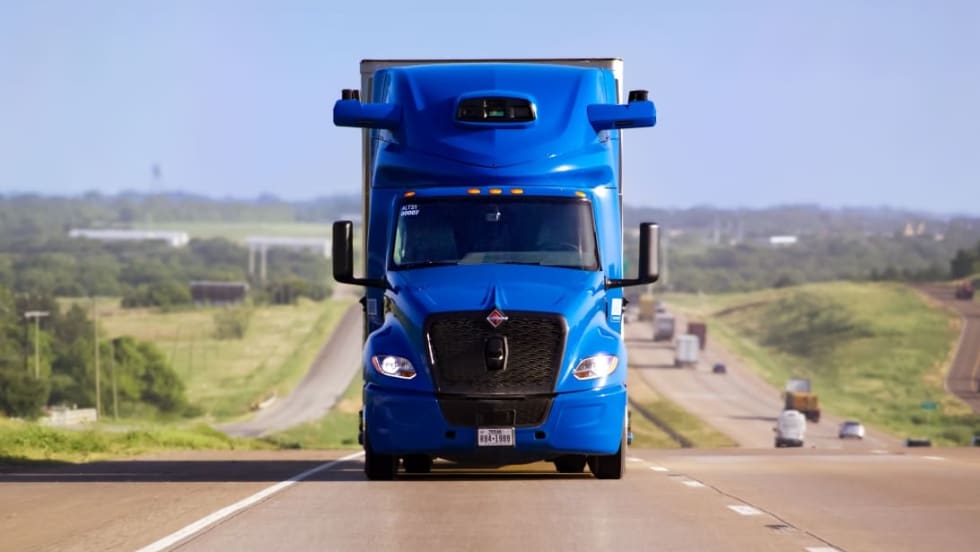
Aurora's latest autonomous trucks it's rolling out with International feature lower-cost hardware designed for a million miles as the company expands commercial driverless freight operations across the U.S. Sun Belt.
Read More →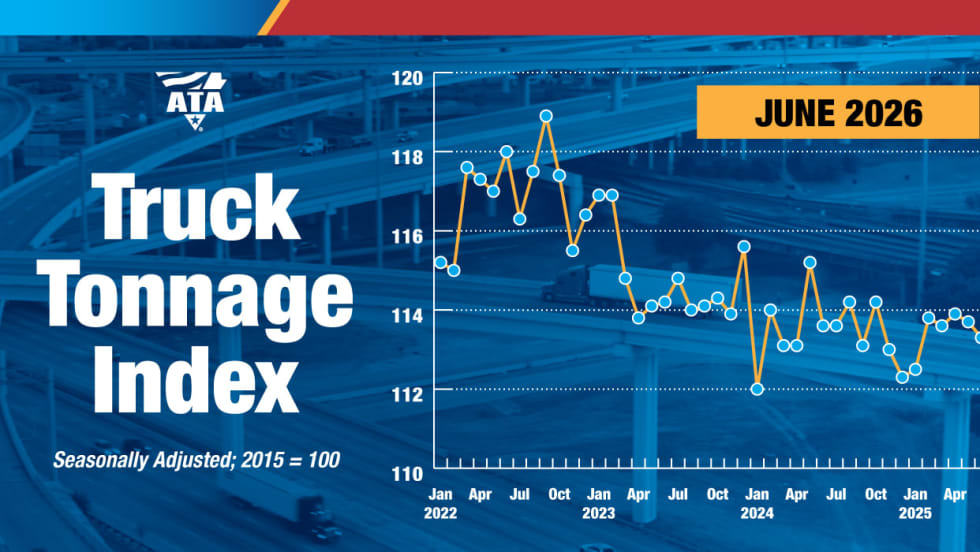
The recovery from the freight recession continues to be driven by reduction in capacity rather than by increased demand.
Read More →
Shadow AI — the use of unauthorized artificial intelligence tools at work — is becoming increasingly common, putting sensitive company data at risk. Learn how trucking fleets can protect sensitive data while embracing AI.
Read More →
The company will bring three business units under the ArcBest brand, eliminate about 2% of positions, and expects the changes to generate $40 million in annual savings.
Read More →
ATRI's annual operational cost report shows carriers trimmed fleets, delayed equipment purchases, and ran older trucks as expenses continued to outpace freight rates.
Read More →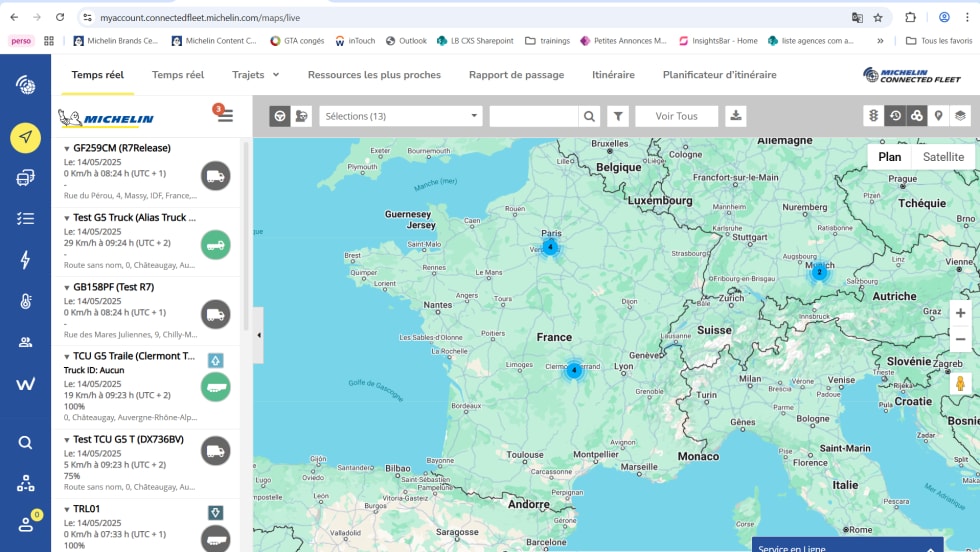
Michelin’s new generative AI tool delivers instant fleet insights, helping managers analyze fuel use, tire maintenance, vehicle status, and operational performance without manually creating reports.
Read More →
New enhancements add AI-powered insights, asset tracking, compliance automation, and configurable privacy controls to Lytx's all-in-one fleet management platform.
Read More →