




Jamie Hagen Gets Real About Running a Small Fleet in an Uncertain Economy
Small fleet owner Jamie Hagen says new legal risks, volatile fuel prices, and a changing freight market are forcing small carriers to rethink how they operate — and what they can afford.

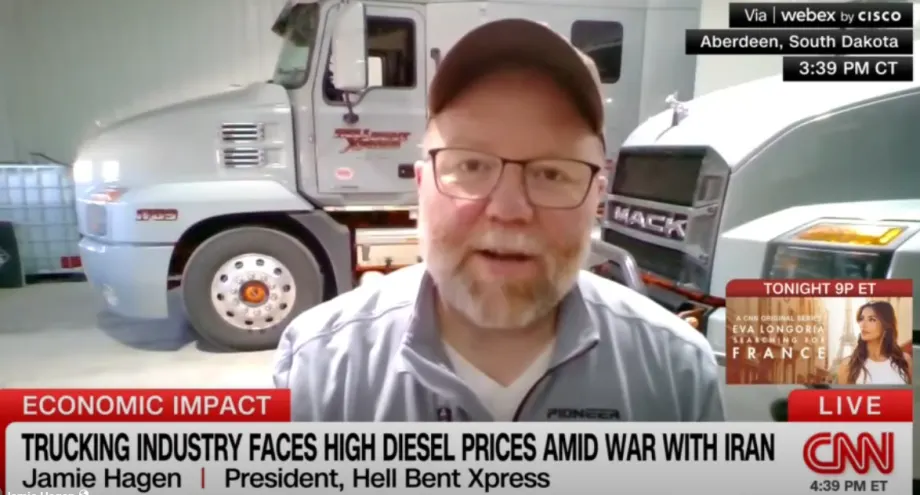
Jamie Hagen has talked to CNN twice this year about the challenges facing small trucking fleets today.
Jamie Hagen/CNN
- Jamie Hagen highlights that small fleet owners face new legal risks and fluctuating fuel prices in the current economy.
- The evolving freight market is prompting small carriers to reassess their operational strategies.
- Financial constraints are becoming a crucial factor in determining what small carriers can sustain.
*Summarized by AI
For years, small trucking fleets have navigated a business environment where rising costs, shrinking margins, and regulatory uncertainty were simply part of the job. Continuous uncertainty has become a daily management hurdle for fleets both large and small.
And now, small fleet owners may have another operating challenge to contend with.
Late May’s U.S. Supreme Court decision allowing negligence claims against freight brokers has sent ripples through the trucking industry.
While many carriers applauded the ruling as a long-overdue step toward accountability, it also raises questions about what brokers will expect from the fleets they hire moving forward.
For Jamie Hagen, owner of Aberdeen, South Dakota-based Hell Bent Xpress, the decision reflects a reality trucking companies have already been living with for years.
"I can't just hire anybody off the street and put them in a truck," Hagen said. "My insurance company demands that I hire qualified people and operate safely. Now brokers may have to play by those same rules."
The ruling opens the door for brokers to face liability claims when accidents occur involving carriers they selected. While legal experts are still assessing the full implications, many fleet owners expect brokers to increase scrutiny of carrier safety records, compliance programs, driver qualifications, and equipment specifications.
That prospect has generated concern among some owner-operators and smaller fleets running older equipment.
Hagen understands those concerns.
"There are a lot of one-truck operators out there who may not even realize they're missing something from a compliance standpoint," he said. "When I started, there were things I didn't know either."
He points to the complex web of regulations governing trucking operations, from driver qualification files to recordkeeping requirements. While larger fleets often have dedicated compliance personnel, smaller operations frequently rely on owners who are juggling dispatch, maintenance, customer service, and driving duties all at the same time.
As brokers face greater legal exposure, some carriers worry that fleets lacking modern safety technologies or robust compliance systems could find themselves at a competitive disadvantage.
Modern Equipment Looks Like a Better Investment Every Day
Ironically, Hagen's fleet may be unusually well-positioned for the new environment.
Hell Bent Xpress recently invested in six new Mack Pioneer tractors and has five more on order.
The trucks are equipped with collision mitigation systems and other advanced safety technologies increasingly viewed as risk-reduction tools by insurers and customers alike.
At the time the investment was made, Hagen was betting on an eventual freight market recovery. He wasn't anticipating a Supreme Court ruling or a sudden spike in fuel costs tied to geopolitical instability in the Middle East.
Now, both developments are making that investment look increasingly prudent.
That’s because Hagen is skeptical that trucking is facing a short-term fuel crisis.
His take is that many carriers are still treating higher fuel prices as a temporary disruption rather than a structural challenge.
Looking at the conflict from Iran's perspective, Hagen noted that the country's ability to disrupt global oil markets remains one of its few remaining sources of leverage.
"It's their only card," Hagen said. "Any poker player knows that. You'd be foolish to give that up if that's the only card you've got."
Because of that, Hagen believes fleets should be planning for months -- or even years -- of elevated fuel costs rather than hoping for a quick return to normal.
That's one reason he feels investments in fuel-efficient equipment are becoming increasingly important. "You can't look at it like you're going to survive this for a week or two," he said. "You have to look at it like you're going to have to survive this if it goes on for years."
"We accidentally invested at the right place at the right time," Hagen added.
He said his new trucks have delivered significant fuel-efficiency gains, an increasingly important advantage as diesel prices climb.
For small fleets operating on thin margins, every tenth of a mile per gallon matters. And in an environment where rates remain under pressure, lowering operating costs may be easier than passing those costs along to customers.
"Fuel efficiency will always be king in trucking," Hagen said. "The fleets that survive for decades tend to have that in common."
The Freight Economy Remains Fragile
The larger concern for many fleet owners is that the industry appears to be facing multiple headwinds simultaneously.
Freight demand remains inconsistent following a prolonged downturn. Driver availability is changing as English-language enforcement and other regulatory requirements tighten.
Now fuel costs are rising just as many carriers hoped the market was finally beginning to improve.
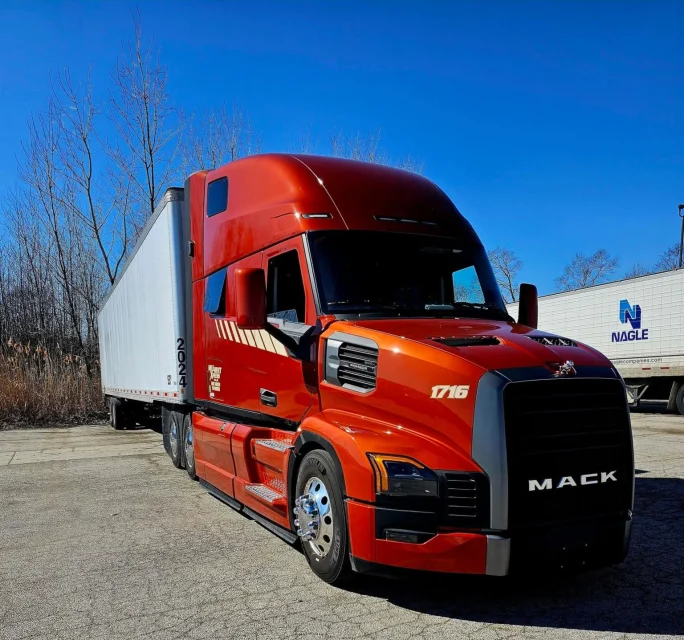
Hagen is hopeful his decision to buy new Mack Pioneers occurred at just the right time to take advantage of improved fuel economy in light of recent volatile diesel prices.
Jamie Hagen
Hagen believes trucking companies need to prepare for the possibility that higher fuel prices may not be a short-term problem.
"Everybody talks about raising rates to cover fuel costs," he said. "But the consumer can only absorb so much of that."
Eventually, those costs ripple through the supply chain and appear in the price of everyday goods. At the same time, fleets must continue investing in equipment, safety technology, maintenance, and driver wages.
Hagen would like to see professional drivers earn more than $100,000 annually, but he acknowledges the challenge facing carriers trying to balance competitive compensation against economic reality.
"It's not that I never wanted to pay that," he said. "You're running a business. You still have to balance the books."
Pragmatism May Be the Best Strategy
For small fleets, the challenge moving forward may be less about predicting what happens next and more about building operations capable of adapting to whatever comes.
Whether it's legal liability, insurance pressures, compliance expectations, fuel prices, or freight demand, the trend lines all point toward a more demanding operating environment.
The carriers best positioned to succeed may be those willing to invest in safety, efficiency, and professionalism even when market conditions make those investments difficult.
As Hagen sees it, surviving trucking's next chapter will require a simple but often difficult approach.
"You can't let your pride or your ego get in the way," he said. "You've got to look at where things are and deal with reality."
For small fleets navigating one of the most uncertain business climates in recent memory, that may be the most valuable advice of all.
More Fleet Management
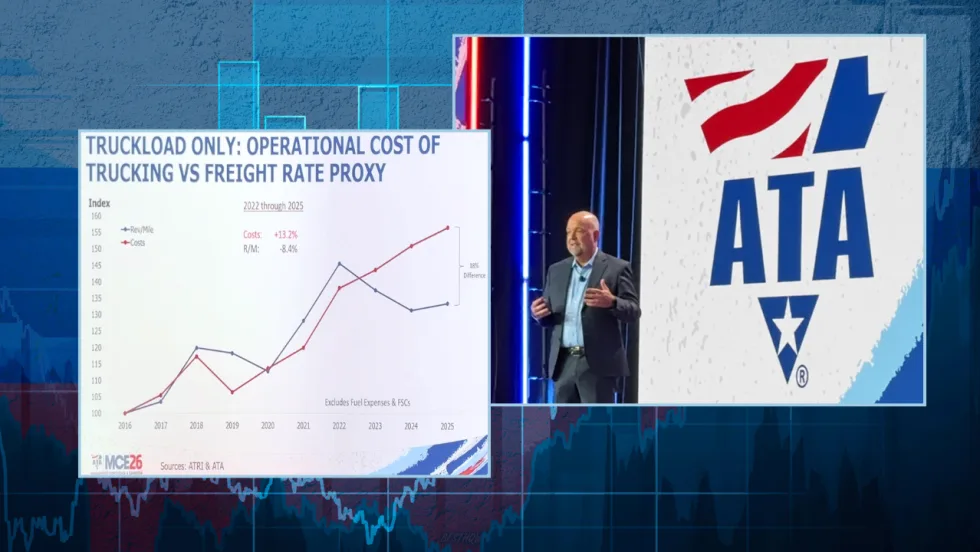
Why This Trucking Recovery Is Different
Freight demand remains sluggish, but rising costs and tougher enforcement have taken enough capacity out of the market to change the outlook for motor carriers.
Read More →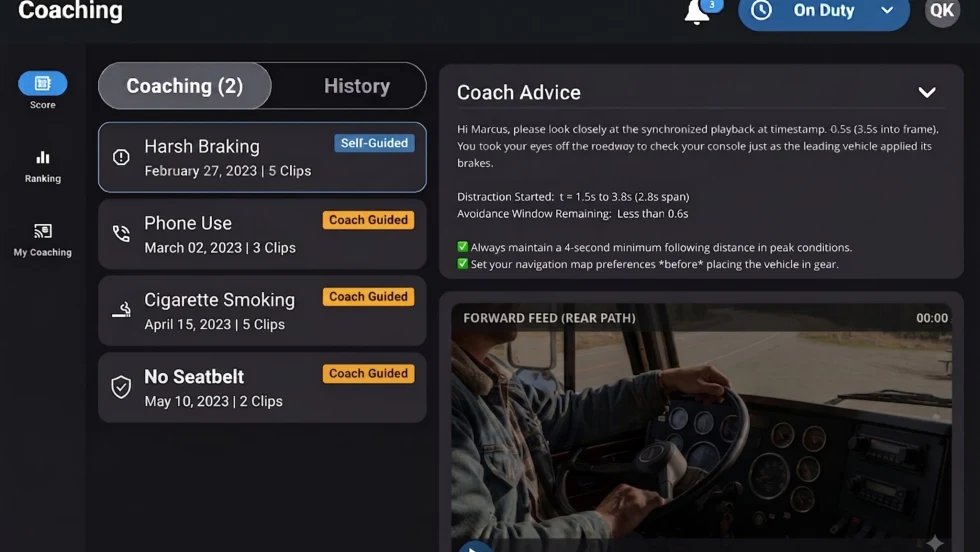
Platform Science Adds Dispatch and Safety Tools
Four additions to PS Fleet help fleets monitor loads, manage driver coaching, share truck locations and adjust video system settings.
Read More →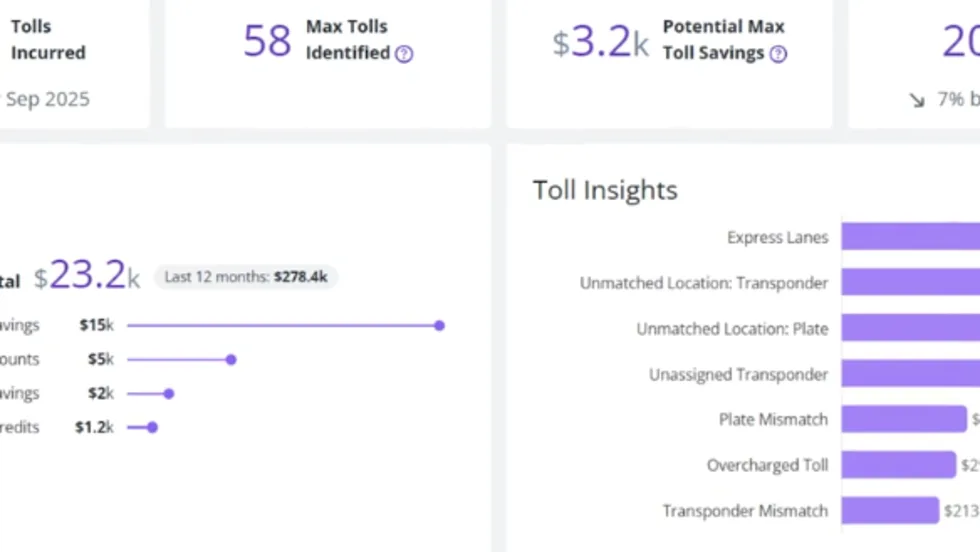
PrePass Intelligence Mines Fleet Bypass, Toll and Safety Data
PrePass Intelligence helps fleets measure bypass savings, flag potential toll overcharges, and spot suspicious transactions by combining data from separate systems.
Read More →
Motive Adds AI Agents for Fleet Operations
New tools automate follow-up on fleet data, from maintenance work orders to driver alerts, with two-way voice conversations planned for later this year.
Read More →
Can You Beat Our Trucking Trivia Challenge?
Test your truck knowledge with 19 trivia questions from Heavy Duty Trucking Exchange. Can you keep up with the fleet pros?
Read More →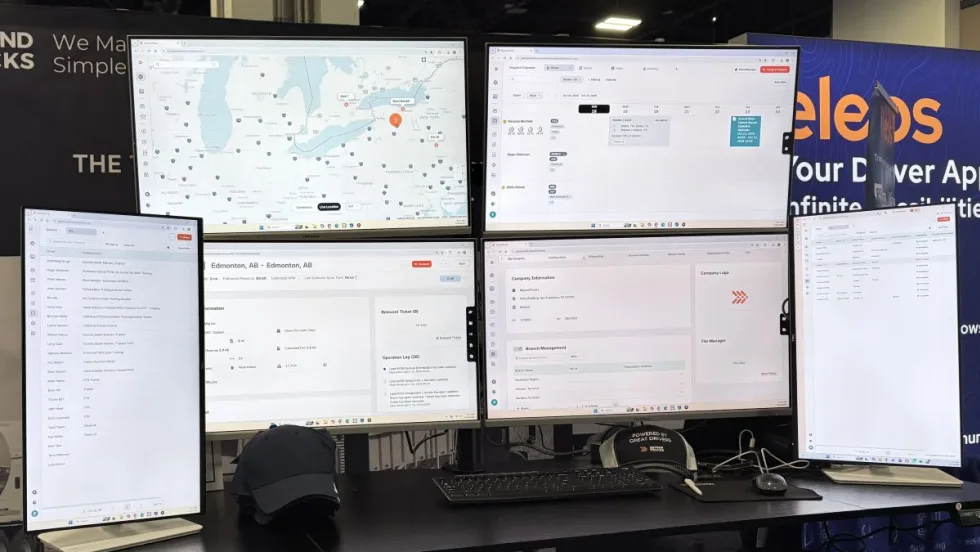
BeyondTrucks Adds Rules Checks to Dispatch
New Compatibility Engine checks driver qualifications, equipment requirements and fleet policies before loads are dispatched.
Read More →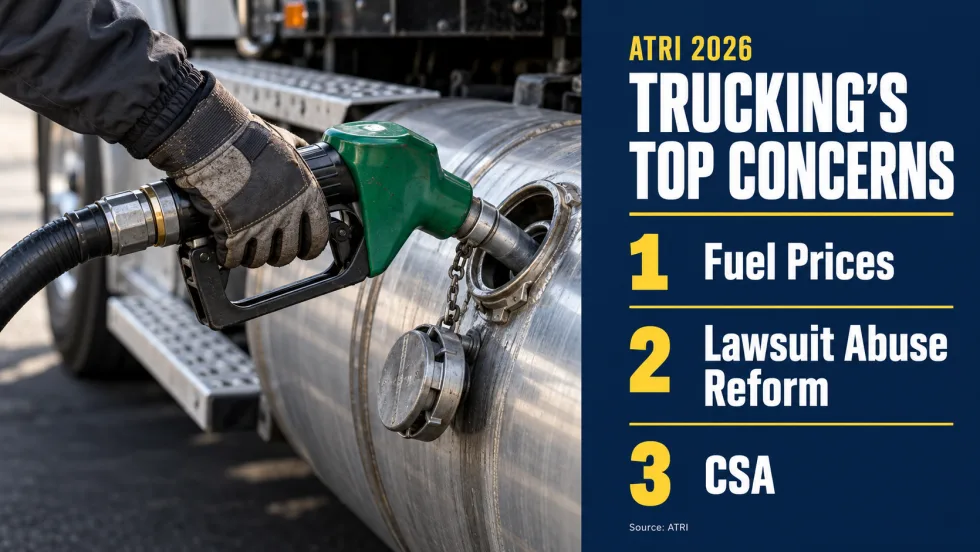
Diesel Prices Hijack Trucking’s Worry List
ATRI’s annual survey finds cautious optimism about freight, but diesel costs, litigation, and insurance continue to squeeze fleets. Drivers have different priorities on several issues.
Read More →
Nomination Deadline Extended for HDT Emerging Leaders
Just a few more days to nominate accomplished trucking fleet professionals under 40 who are making an impact and helping lead the industry forward for the HDT Emerging Leaders award. Deadline extended to October 20!
Read More →
What Will ATA’s New Leader Bring to Trucking's Table?
Incoming President and CEO Mark Colson’s record in Alabama offers clues about his priorities and approach following Chris Spear’s abrupt departure as the head of the American Trucking Associations.
Read More →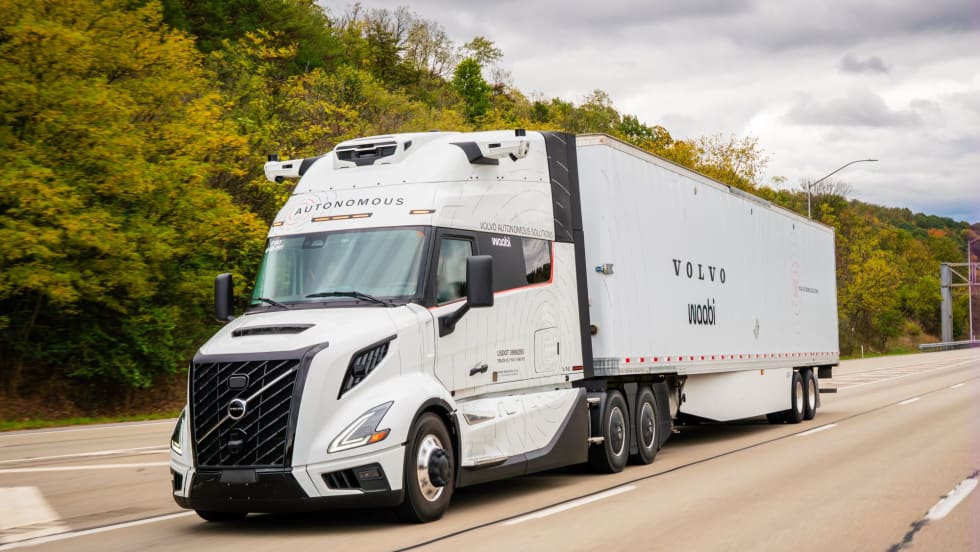
Volvo, Waabi Start Commercial Autonomous Operations in Texas
Volvo VNL Autonomous trucks, powered by the Waabi Driver, are hauling freight directly to third-party facilities for a customer in Texas.
Read More →